

My 20th(!) high school reunion took place a few weeks ago. I might be projecting a little here, but I never really vibed with games set in school because I always felt like they were for and by people who had a remarkably bad time then. I did not. It wasn’t a great time. I grew up pretty different from my peers in a number of ways. It wasn’t a bad time either. I was relatively popular (I was in student government and a halfway decent athlete) but nothing at the main character level. Im at peace with how it went, and feel no need to relitigate any of that.
I, of course, really wanted to play Demonschool anyway. From the people who brought you a game where you protect a house full of babies with progressively more ridiculous guns, and a game where you play volleyball with guns, Demonschool, at the very least, was going to have that same sense of humor, but this time wrapped around a serious-ish story and some mechanics that really speak to me.
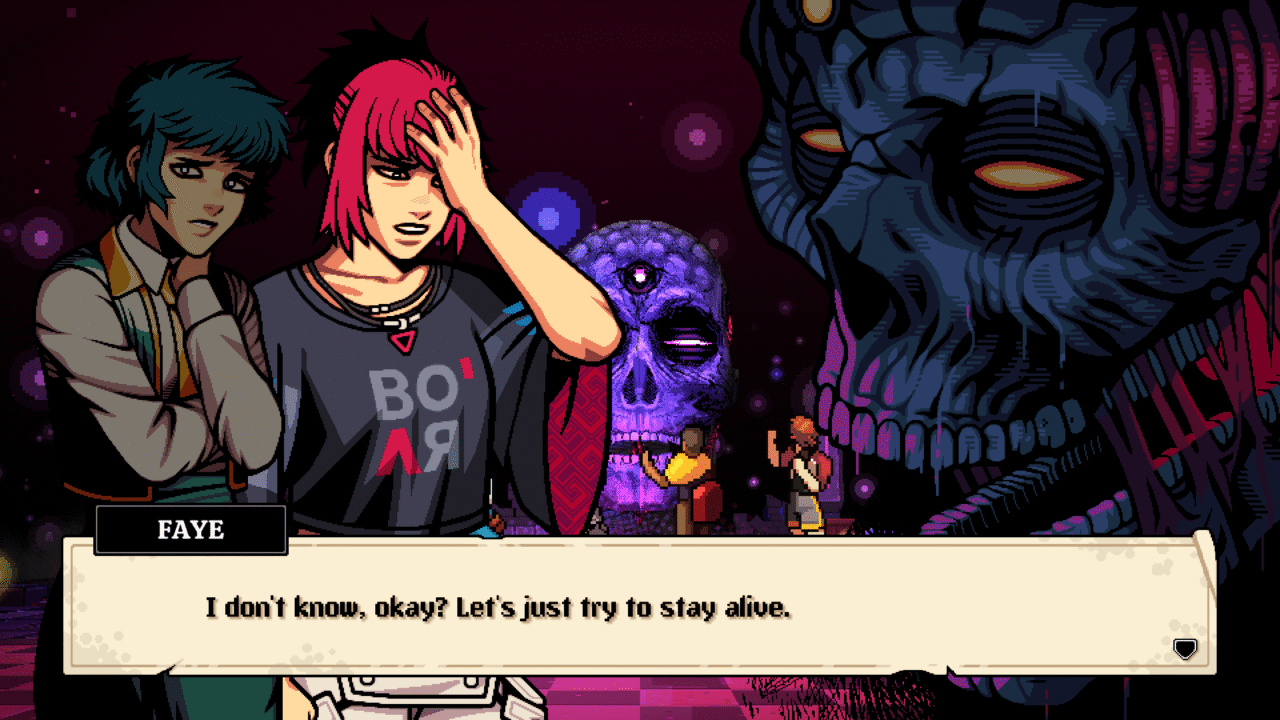
And I was right about the first bit at least: Demonschool is legitimately funny. Be it in small one off bits where an NPC says something completely off putting and unexpected, longer recurring gags that continue to pay off hours later, or fractious back and forths between the Cheesecake Factory menu of colorful characters, the jokes come fast and furious and most of them are great. The things that don’t land pass and get replaced by a new one so quickly that you don’t really have much time to sit with the smell of a stinker. The scope of the doom that is surrounding the school and the island it’s on is mostly light hearted, with any real twists of fate and fortune being played for some reliable laughs.
Outside of the jokes, the writing is more inconsistent. Maybe not just the words themselves, but in combination with glacial mission pacing, I often felt like I was spending way too much time watching the Black Magic Club arrive at a new conclusion to investigate their on-going mystery just to get sidetracked pointlessly. Several days out of each of the ten weeks the team has to save any one felt like I could have just skipped without missing anything vital. You also spend a lot of time revisiting the same smattering of locations that change a little – with different denizens coming and going based on the time of day or day in the week, or with odd activities that can have surprise results like throwing coins into a fountain – but not enough to make them feel less tedious. They look great, dense with little details that appear and disappear depending on the time of day and streets, alleys, and town squares that always feel lived in if not always populated. But that charm wears off a few weeks in, and about half way through I stopped smelling the roses (or picking through trash to find lost opals) entirely.
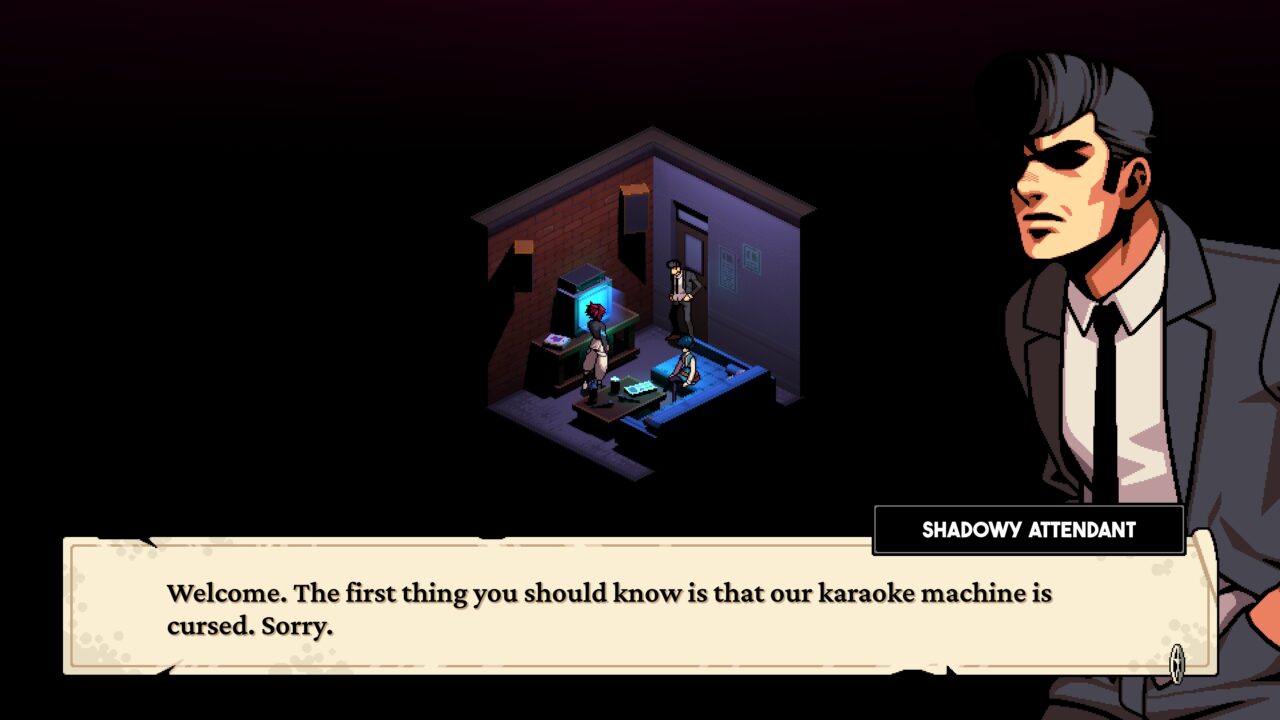
That said, it’s Saturday Morning cartoon-meets-Persona flow is approachable and perfect for playing in small doses. There’s literally a monster/mystery-of-the-week that acts as great punctuation for sessions that don’t feel too long in the tooth so long as you keep within those boundaries. Each day has phases where a main task and also a small smattering of side things can be accomplished, but without the time pressure of of those Atlas highschool RPGs, so you don’t have to choose between spending time to get to know one of your companions better or trying to catch demon fish at the cursed bay. This really helped dull the sharp pains of some of the “busy work” nature of Persona that bounced me off of those games. That said, the tension that the off-dungeon days are completely absent, too.
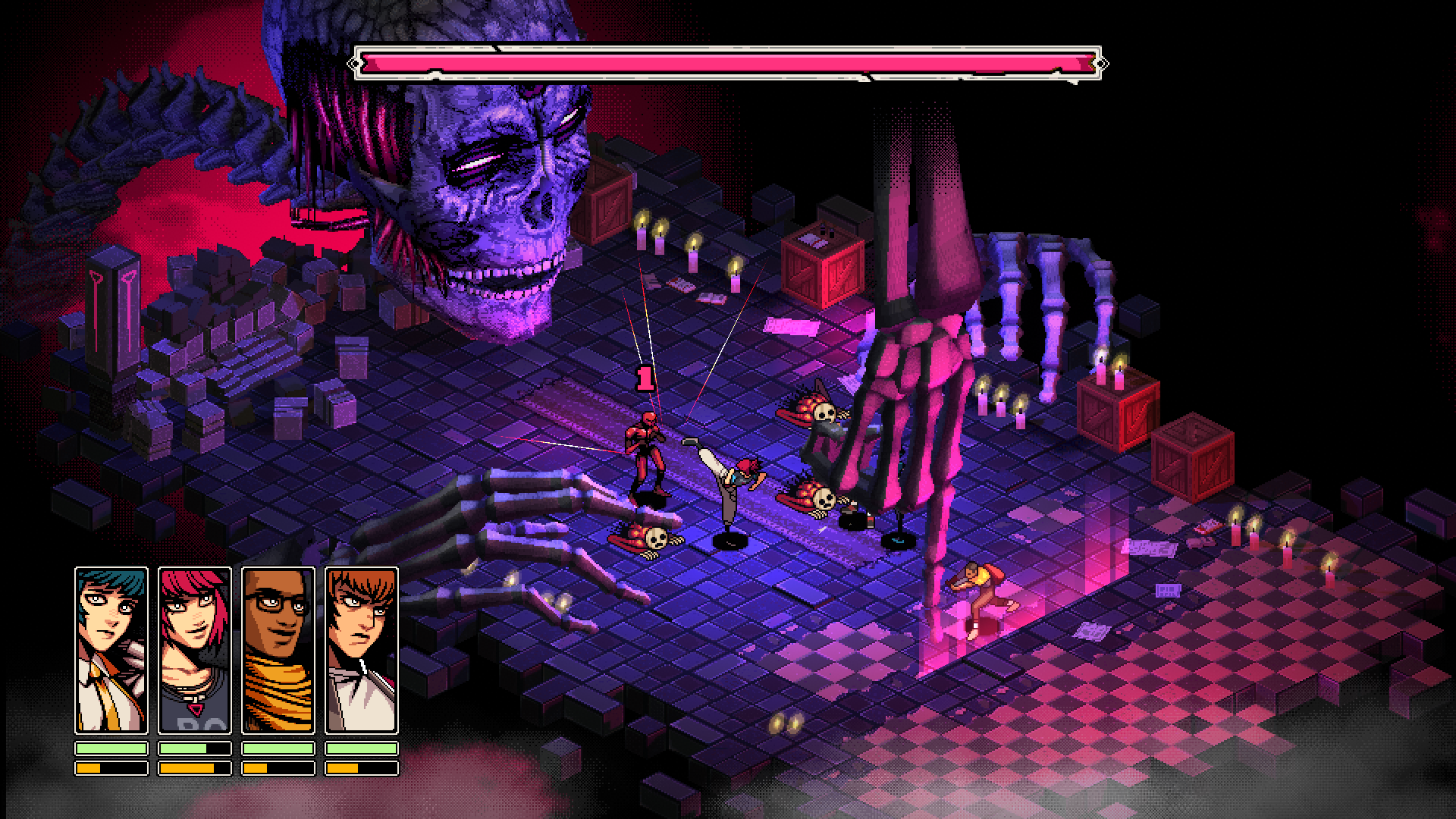
Just about every segment of every day in Demonschool comes with an opportunity to kick hellspawn ass in engaging and rewarding, almost puzzly tactical combat. “Motion = Action” is something you learn early in the tutorial, and it means that there are no attacks to select from a menu like tactics games from yore. Instead, every move you make is also an attack, and each character in your party of four shares a pool of action points to do. Every punch and kick costs more and more AP, so balancing actions across the party is encouraged to get the most out of a turn.

Actions are planned in the planning stage, which helps you foresee the future consequences of your intentions, like if they move enemies around or if the impact might send monsters flying into each other. Here you can optimize your strategy out of relative danger, lining characters up to combo with one another without having to worry about immediate counter damage. Once you’ve locked your choices in, your fighters act simultaneously to carry them out in the action phase. Enemies, whose behaviors are hinted out but not specified and therefore are sort of random, carry out their phase of moving and attacking, and then the cycle begins again. I didn’t love not knowing exactly what the enemy might do next but you learn to work around. A real frustration I never really got used to was that new waves of enemies spawn in periodically and you have no idea who or where they’ll appear. This is specifically annoying when dealing with the sort of crawly grabby ones that move down the field like pawns on a chess board, except instead of getting promoted when they reach the end, they break out of containment and end the game automatically. If you spent the previous turn running your squad down to the enemy side, necessary to win the mission, and one of these bad boys plops down on your end, your whole strategy explodes.
Clearing any given mission isn’t necessarily difficult, but with a grading system based on how fast you can kill a certain amount of enemies and extract, there is an optional challenge waiting for those who seek it. I really appreciated that I could lock in and aim for maximum efficiency – and combat rewards – one battle, and just skate by the next if figuring out the exacting way to meet the mission goals was more than I could stomach. Figuring out which group of four out of the ultimately 15 playable characters, and even how to specifically arrange them to get the most out of every turn, can be a tall task that I wasn’t always ready for, and Demonschool was pretty chill about letting me skip those tests when needed.
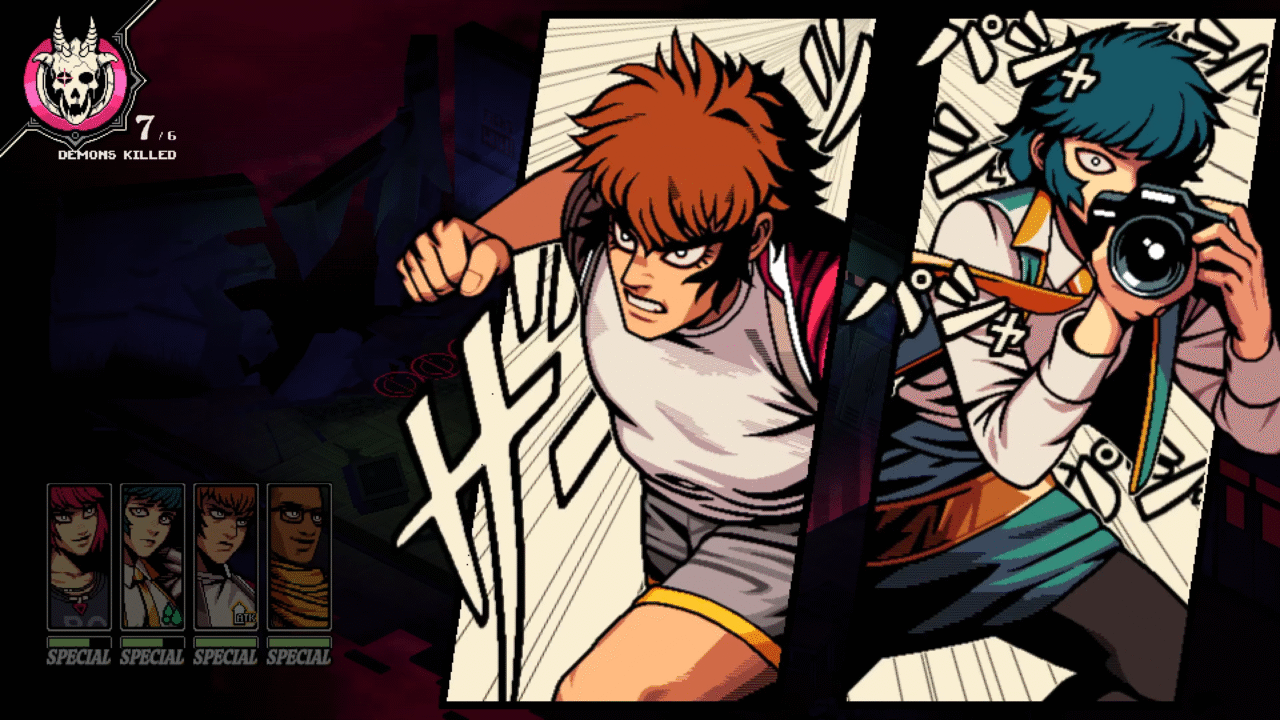
None of your characters gain experience or stats, so making them strong enough for the escalating threats comes in the form of employing good strategy with the right pairings of characters, as well as learning and equipping abilities that can alter them in large and small ways. For example, Knute is a healer, and actually can’t normally damage enemies, but you can equip abilities that allow him to target enemies with his healing attack in order to debuff them instead. There is so much juice to squeeze out of this clever horizontal progression mechanic and its an impressively effective way to grow a team’s strength without having to grind to make numbers go up. I do think it takes far too long for this system to feel like a regular part of my party building ritual, mostly because you need to assign your members in pairs to learn them individually (after finding them in the first place through side missions), and the cooldown before your clubmates can do it again is far too long.
The enemies you scrap with during any given fight are a bit repetitive but are mixed in such a way that always provides an interesting challenge. Regular goons that just walk and punch are a dime a dozen, but eventually share space with demons that want to explode on you or tether you to them with evil magic chains to steal your turns. Beating them all effectively always made me feel smart and resourceful. I cant say the same about the boss fights, which are designed with special, sometimes hidden mechanics that undermine the normal ways of conducting a fight in exchange for a specific sort of call and response mechanic that is less exciting.
As I wrapped up my time with Demonschool, the combat is what I was left missing the most. Its story is largely aimless, and Ill remember it for being funny at the time, but I’m not confident I will be quoting its gags with the homies in 6 months. But its clever use of space and movement as combat actions, mixed with its grindless progress systems that effectively make getting stronger an exercise in getting smarter as well, should be the witty tactical prophecy this high school sim leaves for the ones who will pick up arms to hunt demons in its honor.


