

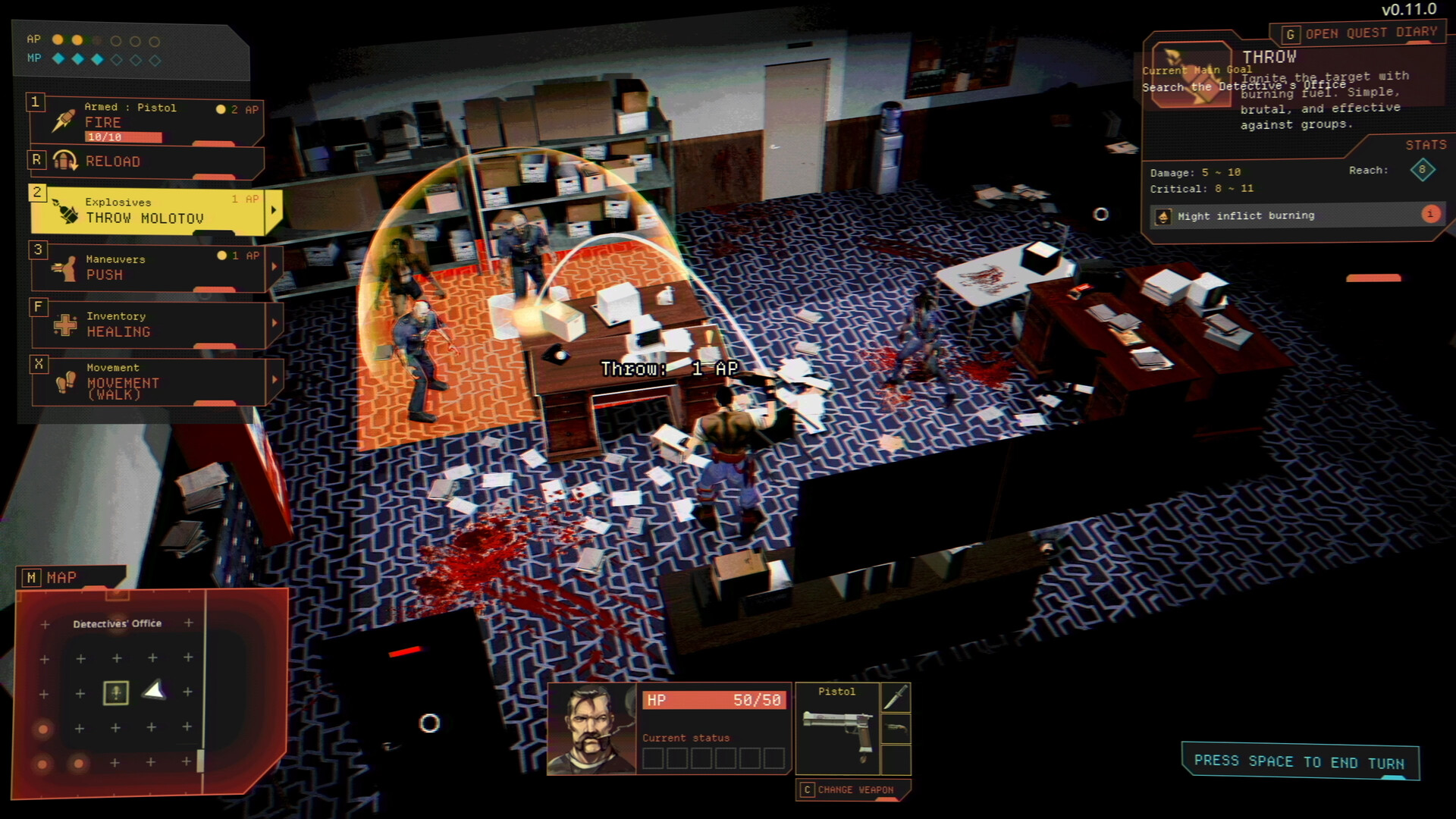
In recent years there’s been a re-appreciation of Resident Evil-style horror games, largely lead by Capcom themselves, remaking the classic RE2 and RE4, and innovating on their own formula with RE7 and RE8. At the same time, the independent scene has done its own bit of reminiscing, mostly by playing around with, or deconstructing the key pillars of what makes those games tick. Games like Save Room drill down on one particular system, the Tetris-esque inventory management, and make a whole game out of it. Then there’s Vultures: Scavengers of Death, a game that takes the resource scarcity, puzzle solving, and zombie crushing and turns it into a turn-based RPG.
If you’re deep in the Steam store trenches, you might be thinking “there is a turn-based RE-style RPG already and its House of Necrosis.” First off, great pull. Secondly, there’s room for more than one. Especially since Necrosis is specifically a roguelike, run-based RPG experience focused on optimization and score chasing, and Vultures is a more traditional single player narrative experience.
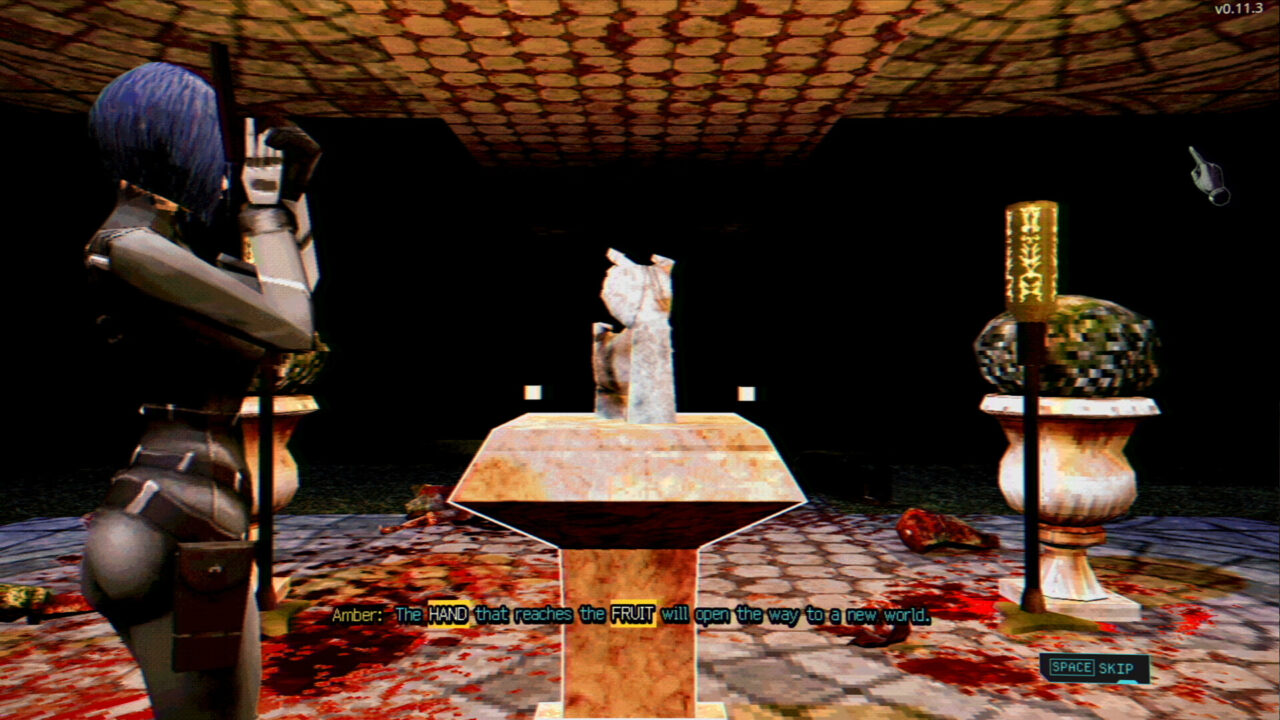 I didn’t see much of that narrative in the limited demo I spent some time with, but what I did see promised a dark tale about cultists and the kind of twisted rituals that can bring the dead back to life. The setting for the first level – a destroyed, 90’s police station littered with bodies both dead and undead – set some great early vibes, the environment telling is own silent story of the kind of horrible shit that went down there hours before you, a rough and tumble member of the paramilitary force called VULTURE, stepped onto the scene. Your mission: to extract whatever usable intel and materials you can to help find the cure to the bio-hazard incident that has befallen Salento Valley.
How long these tense vibes stay will depend on what you come to games like this for. There’s no real jump scares in Vultures, and zombies don’t really have the presence to be scary when you can take as long as you need to assess your situation during any given fight. Though I definitely get creeped out from time to time, I tend to not be very scared of the more action centric versions of games like this, there’s no amount of “immersion” that would make me feel like some faceless freak is coming to kill me personally. That said, I do love the tension of trying to escape danger, and the fast tactical thinking necessary to make it through a tough group of monsters with whatever ammo and resources I can muster. In that way, Resident Evil 4 is just as “scary” as Elden Ring, to me, and I’ll say that Vultures demands that kind of thinking from players moment to moment, as well. The first time I ran out of ammo, my pistol was looking back at me like that first zombie in the storm from the original Resident Evil.
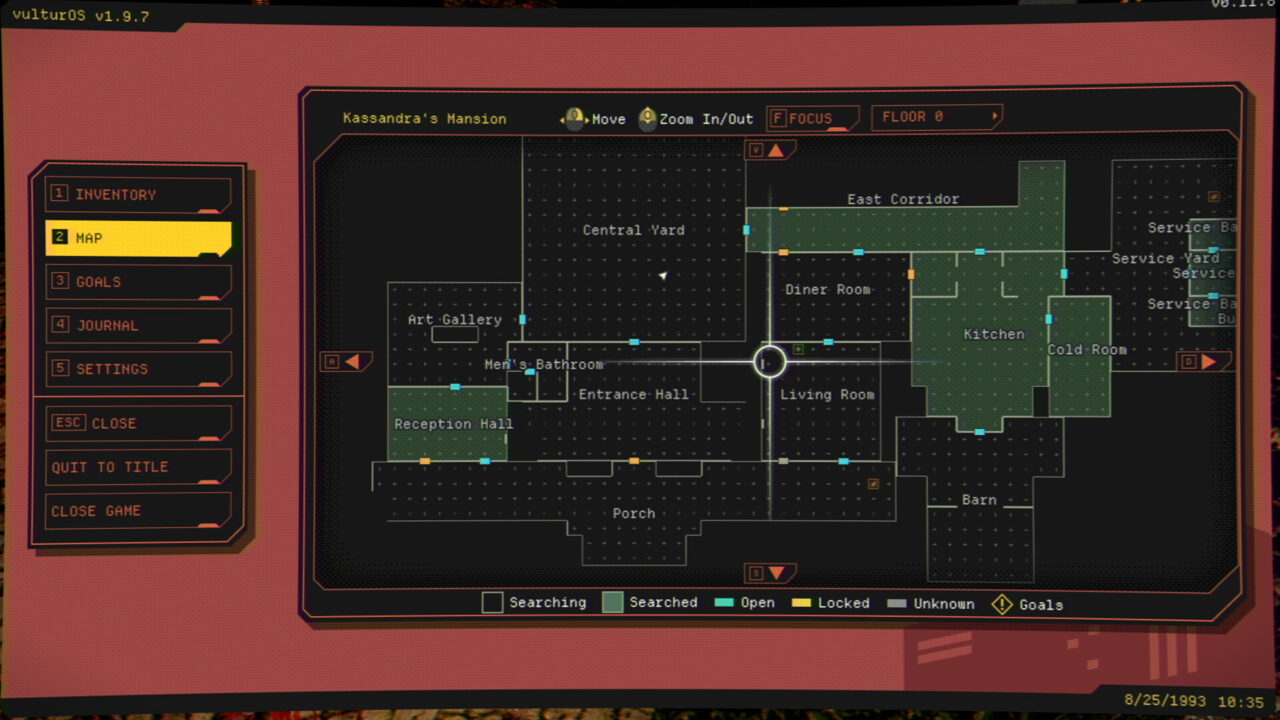 Moving from room to room in stealth mode is the best way to get the drop on enemies, and finding the right moment to strike (and angle to strike from) can mean the difference between walking away or limping away. Once you open combat with a big critical hit either with your pistol from a distance or up close with your knife, things seamlessly roll into turn-based mode, where moving and doing things like attacking, switching weapons, or using items cost points to do.
Where the blood soaked office hallways and disheveled offices set a great tone in exploration, it doesn’t translate into interesting spaces to have turn-based tactical combat in. There are minimal obstacles to put between you and shambling drones who want to eat your face, most rooms being largely just wide open spaces where your best bet is to kite enemies who have no other offensive options besides walk towards you and attempt to take a bite. I missed the environmental or positional factors that could be used as an advantage or at least add a bit more tactical variation that you often find in other games in the genre.
Combat has its wrinkles, though.Enemies in the demo really didn’t very at all as far as what they can do to you, which is shamble in your direction and attack. Their biggest endangering factor was that they often came in groups, which could easily overwhelm you if you weren’t careful. Luckily, your VULTURE agent has some options. You can shove enemies around when they get too close, which is handy in that previous situation. When shooting, you can target different parts of the body for a chance to add different kinds of debilitations to the target. I would frequently aim for the legs, which could immobilize enemies, making them easy targets, while also giving you plenty of time to reposition without them breathing down your neck. Knife cuts could cause them to bleed, one of a handful of possible status ailments in the game.
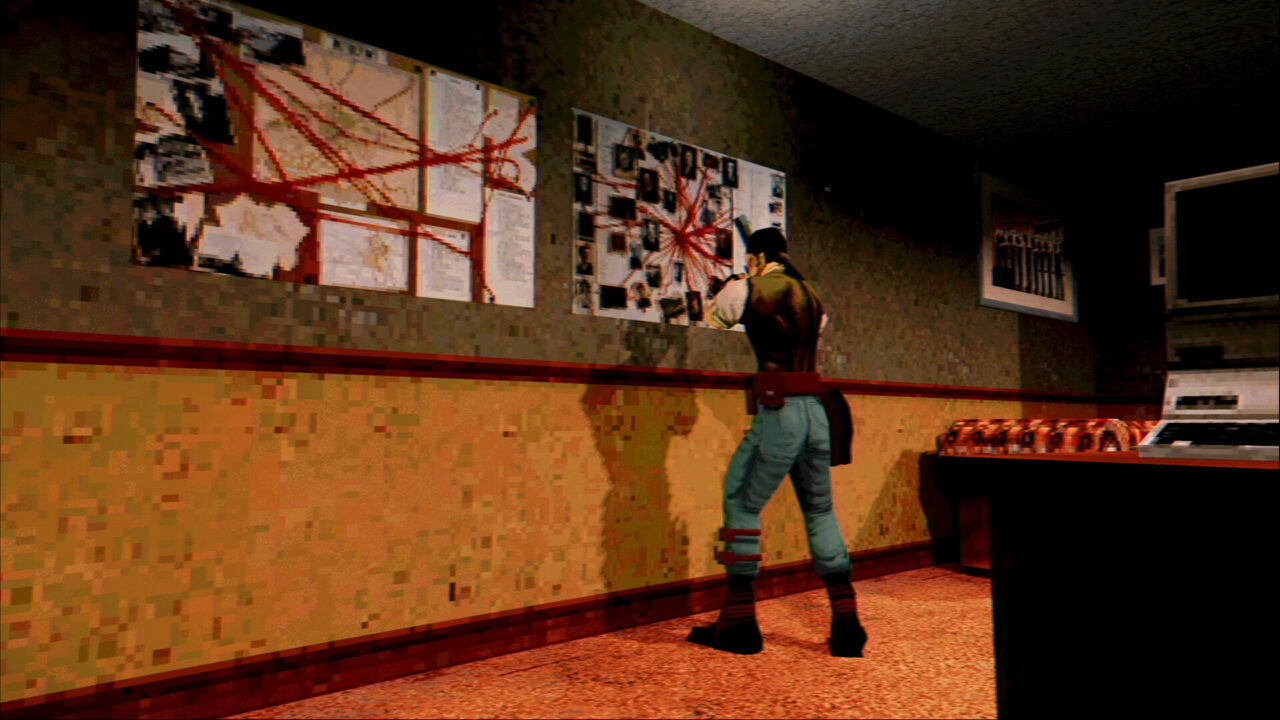 With the limited enemy types and weapons, I’m not sure this demo is an accurate display of this game’s potential depth, especially since the very last fight, against a complete whopper of a boss, really speaks to a better game in the distance. Against this creature, I had to plan around its patterns, saving my more damaging attack options for when it revealed itself from the shadows, while also navigating the more fodder minions that kept me moving in between phases. It was a lot of fun, and great pick-me-back-up after the charm of the exploration parts of the earlier bit wore off.
My time with Vultures: Scavengers of Death was a bit of a roller coaster ride. I was really charmed by the RE but a tactics game formula out of the gate, but the plodding exploration and limited combat encounters stopped wowing me and began to get a little tedious. I can see how this could be a slow burning, tense experience with more on the line through an entire campaign, but for an hour where nothing I do here matters, I wanted something more gripping. Then I got it from the last boss, and now I can’t wait to sink my beak into more of this when it launches in full.


