

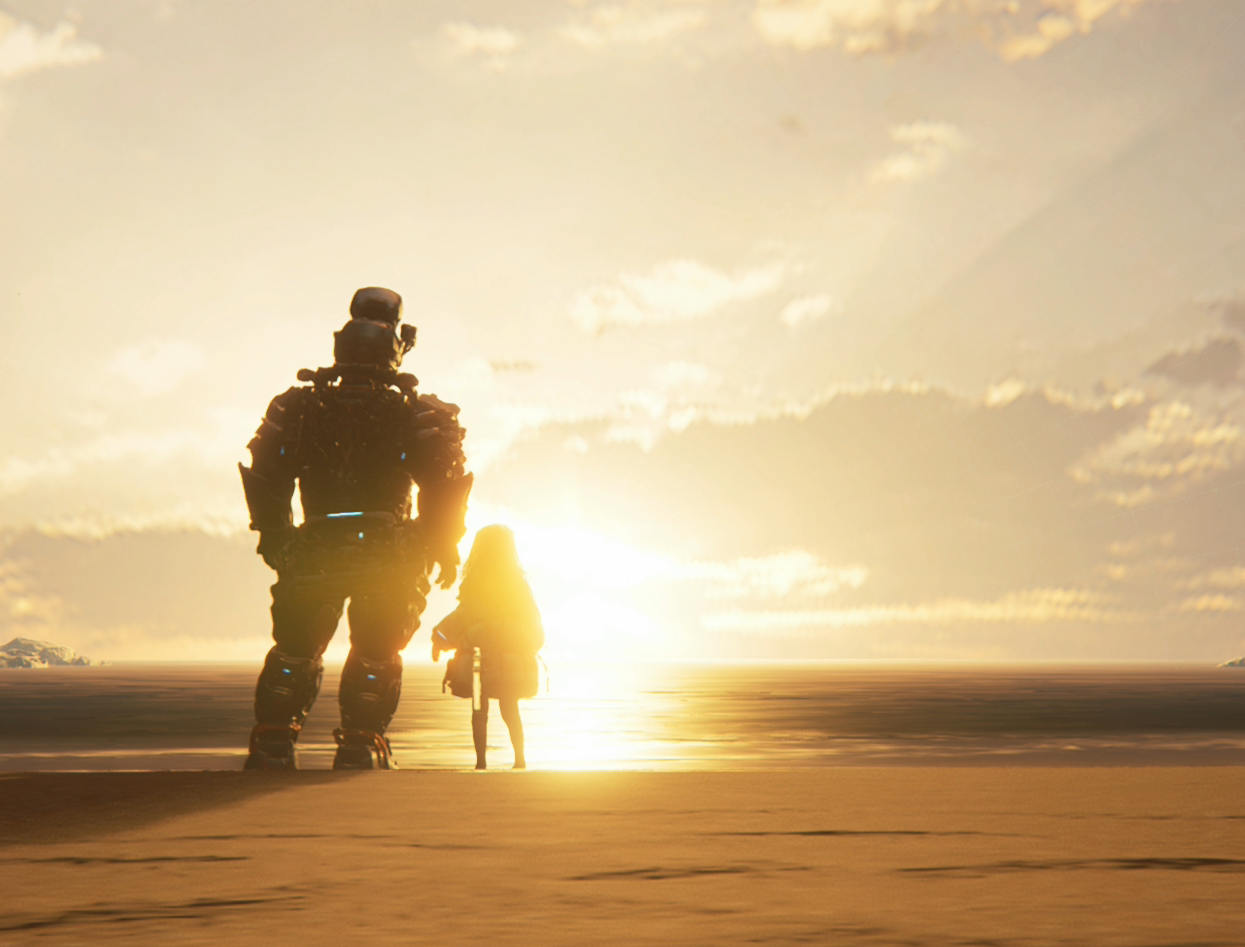
Ever since getting my first taste of Capcom’s new IP, Pragmata, at last year’s Summer Games Fest, it has been one of my most anticipated games of 2026. From boosting around levels, hacking malicious robots, and getting adorable pictures from my little adopted robo-daughter, I can easily say that the anticipation was well placed. Pragmata has hacked its way into my heart and quickly has become one of my favorite games of the year.
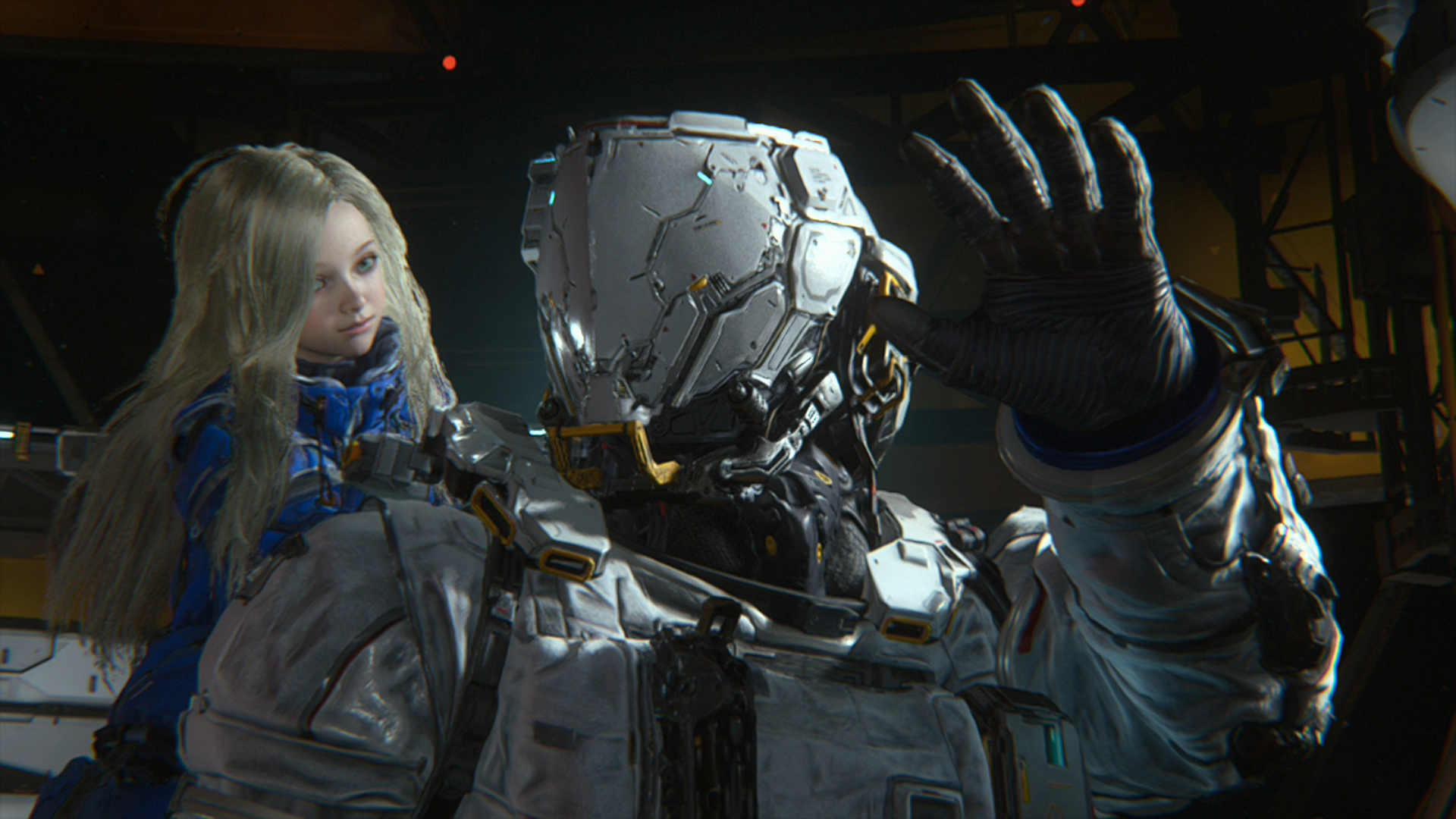 You play as Hugh, an engineer sent to the moon to repair what is basically a really big 3D printer that has broken down, but gets caught up in rogue AI hijinks and has to find a way to make it back to Earth alive. Shortly after things go sideways, Hugh is helped by Diana, who is in fact a Pragmata – a special robot that closely resembles a young girl, and together they navigate the damaged moon base, contend with the station’s AI, IDUS, all the while piecing together what transpired to cause IDUS to go against the human workers on the moon. While neat, I never really found the science fiction elements to be the biggest draw of Capcom’s latest, feeling a bit generic. How many times have we seen the rogue AI bit be done? In its defense, however, as someone with a 3D printer, I find myself wondering about the hobby’s future when I look at the industry’s potential future.
In order to discover the causes and issues plaguing the moon base, you will be exploring the various sections of the malfunctioning station, with each tailored around a specific function reflected in the domes’ visuals. The Mass Production Array, with its sprawling metropolis, feels and looks like New York, while the Lunum Mines sets you on the surface of the moon and all of its rocky facade. Visually, even on the Switch 2, where I played, everything looks great, though the designs and layouts of these areas were a mixed bag.
Being a game that features a great deal of items and collectibles to find, something that really took me by surprise, the levels and their layouts are pretty big, with hidey-holes and goodies tucked behind corners all over the place. In areas like that city, I found myself having far less hassle navigating around, with clearer, more distinct landmarks than the Terra Dome, with its winding roots and trees that all seemed to blend together after a while. The map wasn’t much help, giving a rather unhelpful top-down view only, making me wish for a minimap of sorts, akin to the one used in Metroid Prime, for instance, since verticality is used rather frequently in its levels. That said, I did find myself appreciating the game, giving me a clear tracker of what items can be found in what zones of each level and how many were left to find – perfect for completionists. The plentiful fast travel points that let you zoom between your safe zone, the Cabin, and different areas made revisits to collect things a breeze.
 Even the most expertly crafted maps are only fun if exploring is fun to do, and controlling Hugh and Diana around the station feels snappy, with solid shooting back in action. Typically, when I see space games with the main character in a bulky space suit, I just assume that the game’s tension will come largely from the fact that the protagonists can’t outrun the danger. Not the case here. With boosters on his upgradable space suit, Hugh can hover between platforms and dash around the maps like Mega Man X. Certain upgrades you can acquire will even slow time whenever you perform a perfect dodge by boosting out of harm’s way just in time, letting you score some added potshots on the angry bots going after you.
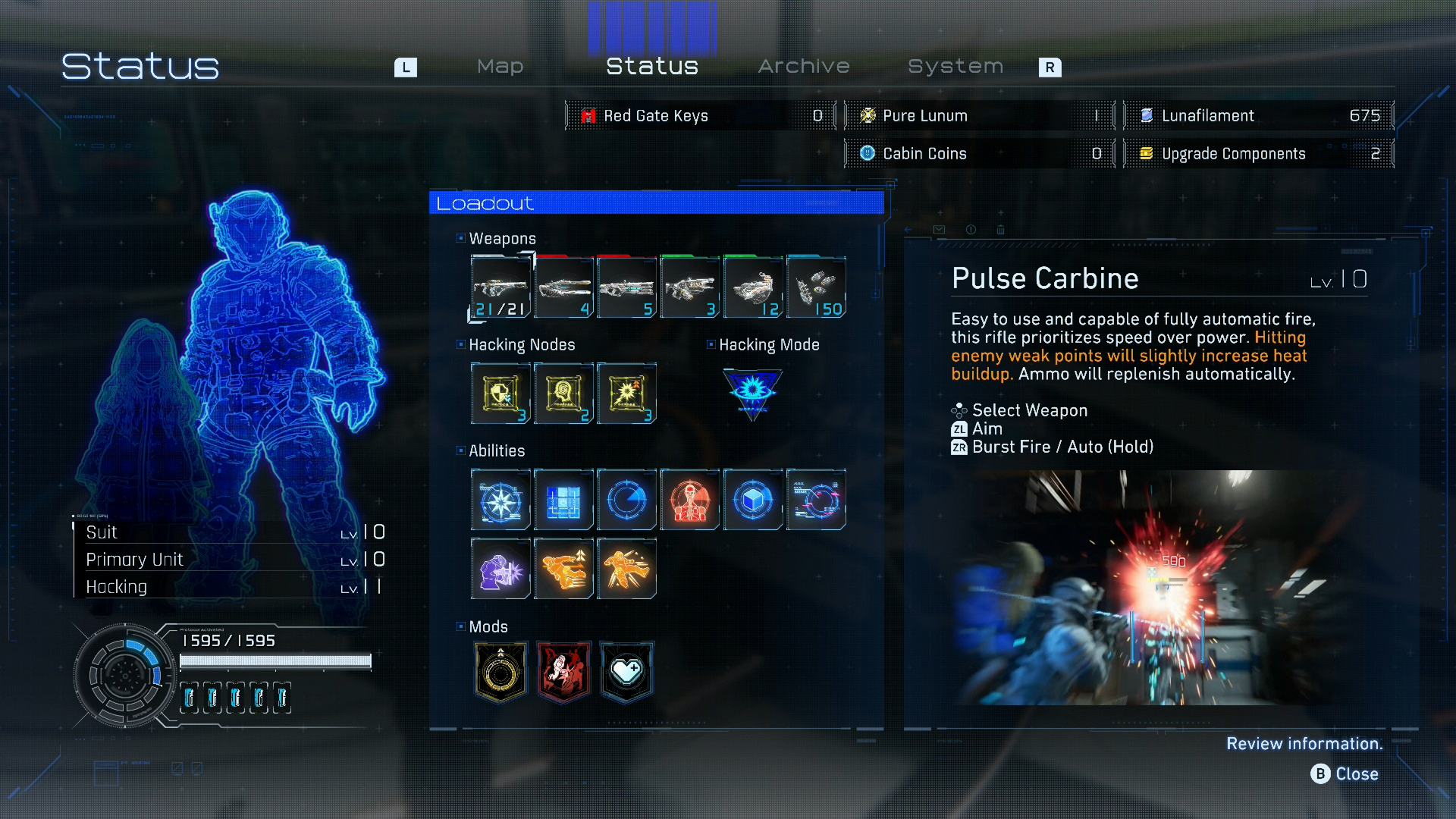
Speaking of shooting bots, you gain access to a mix of the familiar, like shotguns and a pistol, and more utility-focused offerings like the riot blaster, which will knock down enemies, the stasis net that freezes them in place, and the decoy generator that (surprise surprise) puts up a fake image of Hugh to draw the attention off hostiles.
Pragmata’s approach to weapons being more of a consumable item, with each one (except a standard sidearm that does have infinite ammo but does feature a far too slow cooldown bar to refill ammo) only having a handful of shots before being ditched, requiring you to find more in the field, was an interesting choice, but not one I was particularly enamored by. It reminded me somewhat of the more recent Zelda games and their weapon break system, which I am firmly in the “anti-weapon break” camp, so it wouldn’t be my first choice, but I do appreciate the sidearm with the infinite ammo to always fall back to. But the duo has another trick up their sleeves – Diana herself!
Even the strongest weapons in Hugh’s arsenal seem to ping off the armor of the robots that will get in your way, requiring you to take advantage of Diana’s powerful hacking ability to expose the delicate components of your foes. To do so, you will need to complete a simple puzzle-esque minigame in real time, routing a cursor to a specific box on the grid, which will open up the bot’s chassis. The fact that this has to all be done as you dodge and shoot your way around the area gives its combat an injection of chaos into the mix, with the bosses and their giant hacking grids paired with devastating attack patterns to learn, leading to many white-knuckle moments.
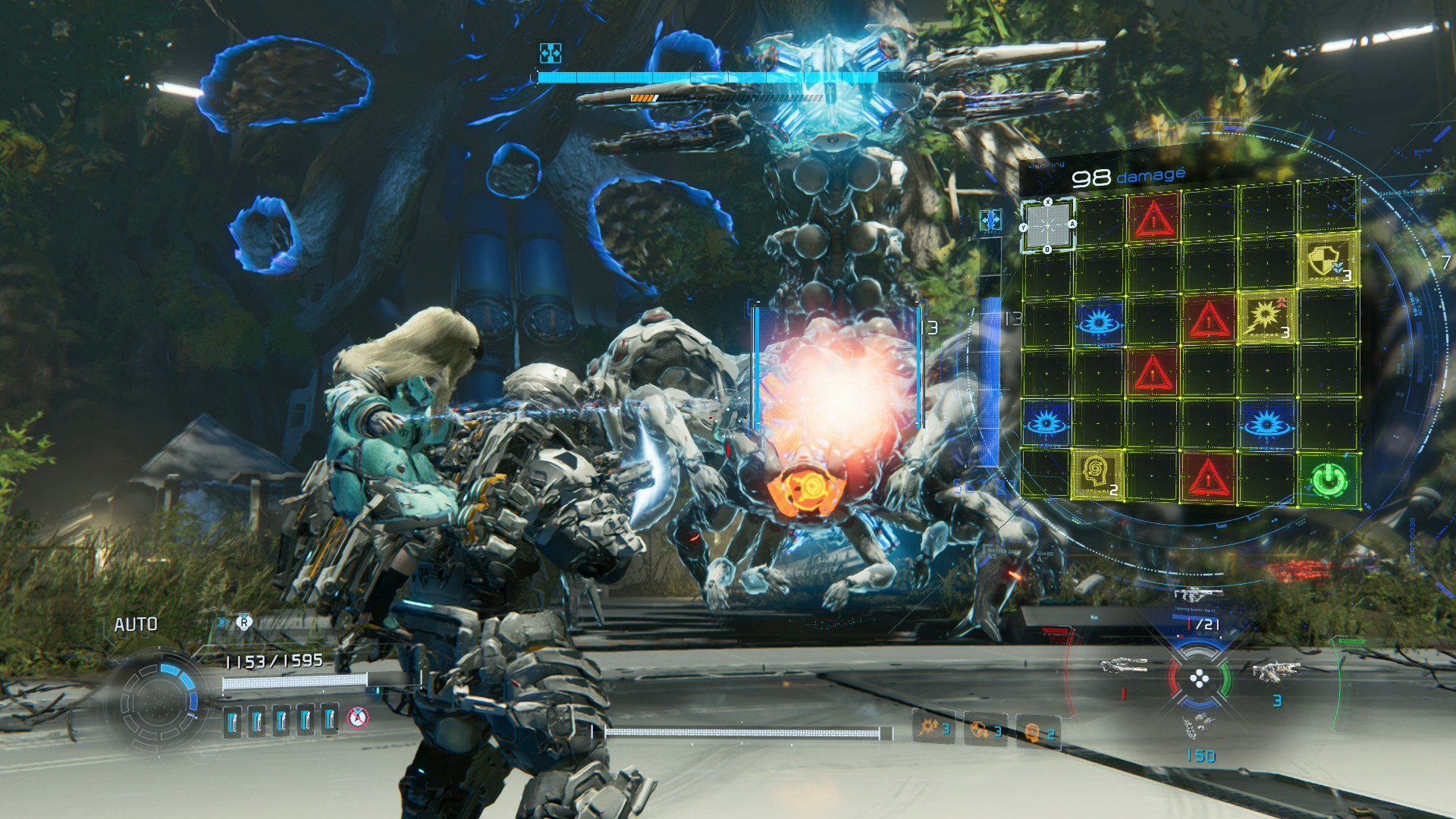 What really sold Diana’s hacking mechanic for me was how you can evolve it and augment it as the game progresses, allowing special hacking nodes to populate it that can let you expose all similar robots nearby at once, or change them to fight for you instead of against you for a short time. This adds to the minigame’s complexity, true, but they all remain optional, so that in especially tense moments you can opt to head straight for the goal instead. There is even an ability you can unlock for Diana relatively early on that allows her to auto-hack the target, which does a good job of also hitting those hacking nodes, too. It’s saved my butt more than once during encounters.
I’m reminded of Devil May Cry and Onimusha – two other Capcom series that have grown into heavy-hitting series of theirs, which began their lives as concepts for new Resident Evil games. As I was shooting through the bloodthirsty robots in Pragmata, a thought that kept popping up in my mind was how it wouldn’t surprise me if the title began its life as a concept for a more futuristic, sci-fi-geared Resident Evil. Perhaps it is because we are only a few months past Resident Evil Requiem’s release, but from the over-the-shoulder shooting, third-person perspective, and the highly thematic environments populated by lurking enemies and puzzles, I can see that loose possible link back to a common ancestor.
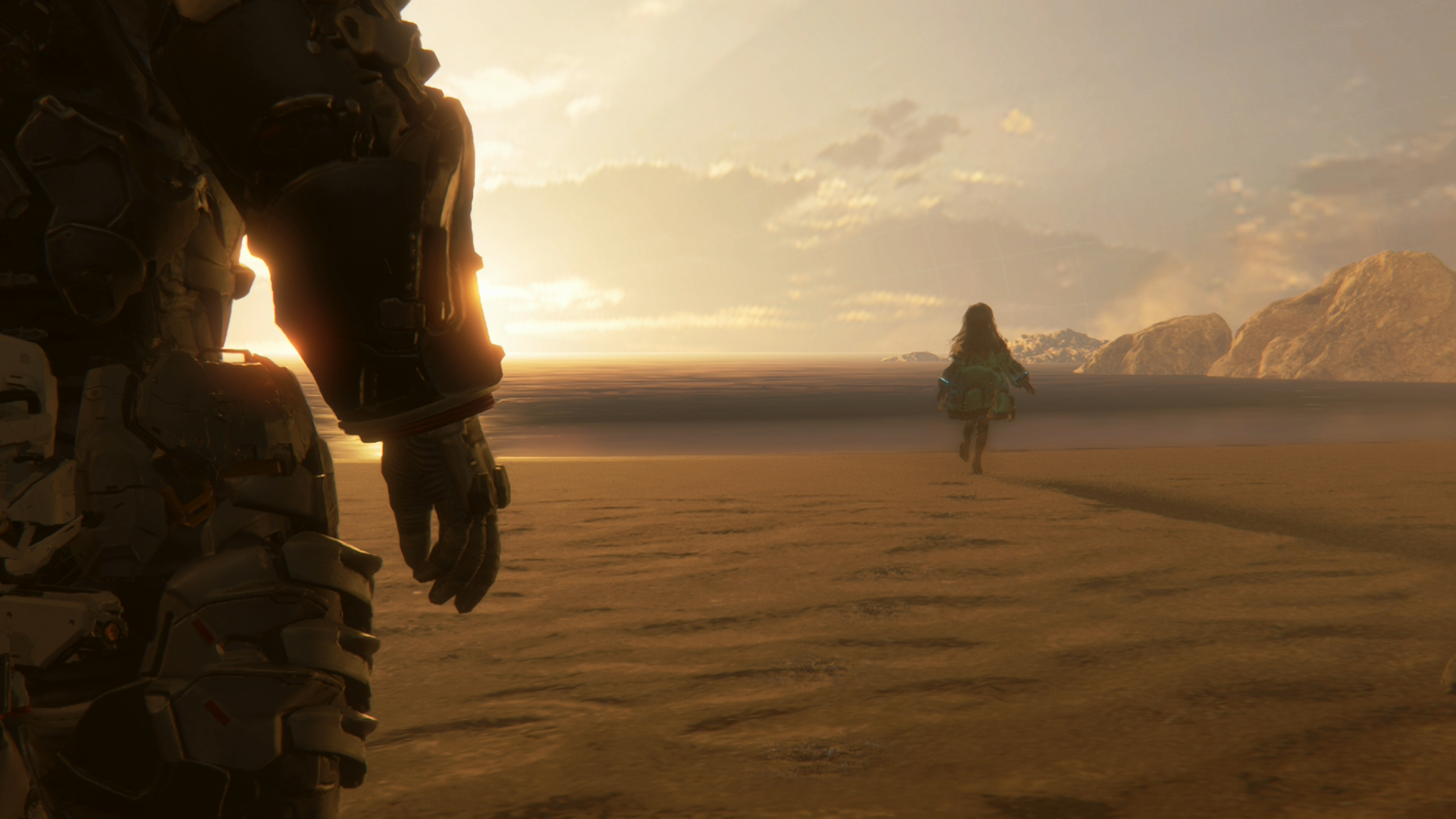
Pragmata is a game that I will be thinking about for a long time, yet I think. While the science fiction elements didn’t blow my mind, the connection between the characters of Hugh and Diana, however, did. As a father myself of an almost three-year-old little dude, the wonder in Diana’s expressions and dialogue whenever she saw something new instantly hit home, reminding me of the same looks and excitement I see daily on my son’s face. Having Diana ask Hugh about every new Earth object memory you find or playing hide and seek with her are moments that fill my days almost more than any other task I do, and that same sense of wonder is duplicated here, and I can’t help but just smile every time it happens. Though it will be some time yet before my boy is as articulate with his words as Diana is. There are many games where I find myself caring about their characters, but it is far rarer for me to feel for characters and relate to them on such an intimate level as I do with Hugh and that little girl on his shoulder. And yes, there were moments in this that made me cry.
 Capcom has been firing all rockets the past few years, and 2026 is shaping up to be an absolute banger for the long-running studio between Pragmata, Resident Evil Requiem early this year, Onimusha: Way of the Sword coming down the road yet, and even hints of a Monster Hunter Wilds expansion rounding out the year. It may have spots of rust here and there marring its otherwise refined surface, but this still is one of the games that I would bet will land somewhere on my top 10 games of the year come December, and Hugh and Diana, with her drawings and games of hide and seek, will be one of my favorite, and most personal, duos in all of gaming. And now, I’m off to go run around and play with my boy, and enjoy these days while they last.
A Nintendo Switch 2 code was provided to us by the game’s PR firm.


