

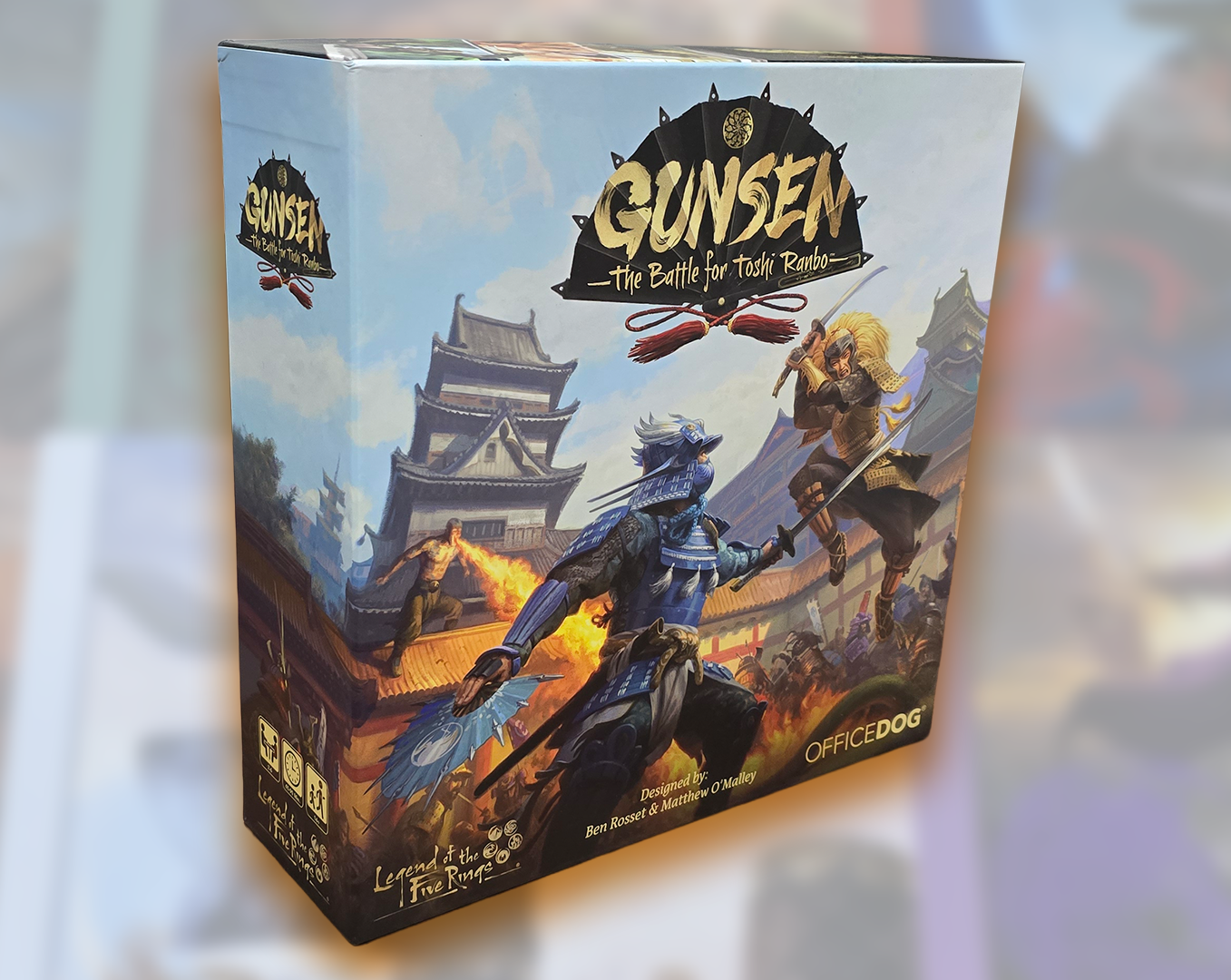
One of my favorite parts of gaming conventions is coming across and trying a game I had never heard about, and coming away from it loving the surprise I had just stumbled across. Almost as if by fate, being simply at the right place, at the right time, and looking the right way. Back at PAX West, while meandering about and enjoying my time in the board game hall, I had one of those moments when I stopped and joined a demo game of Gunsen: The Battle for Toshi Ranbo.
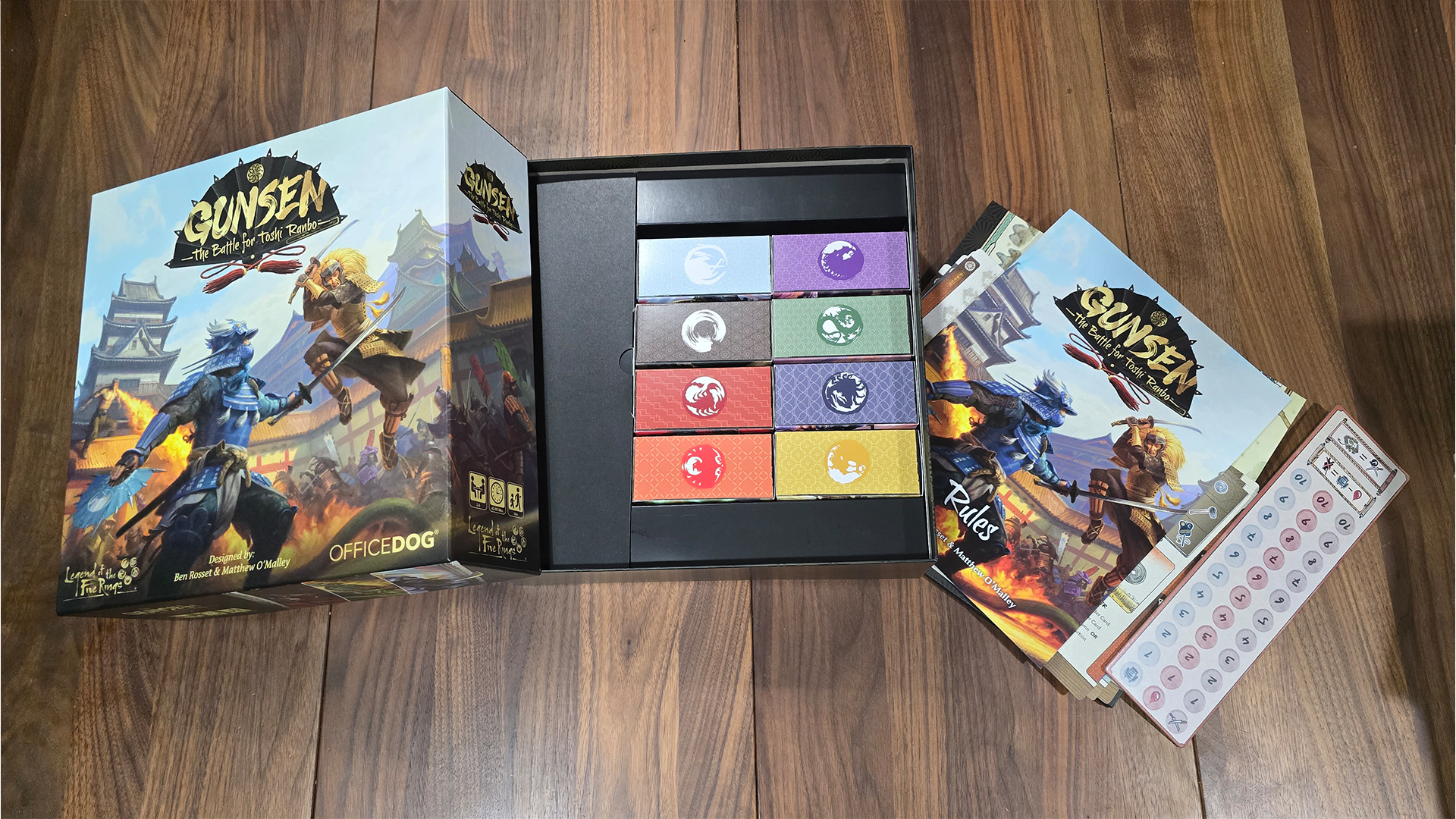
Players: 2-6
Time: 45-90 min
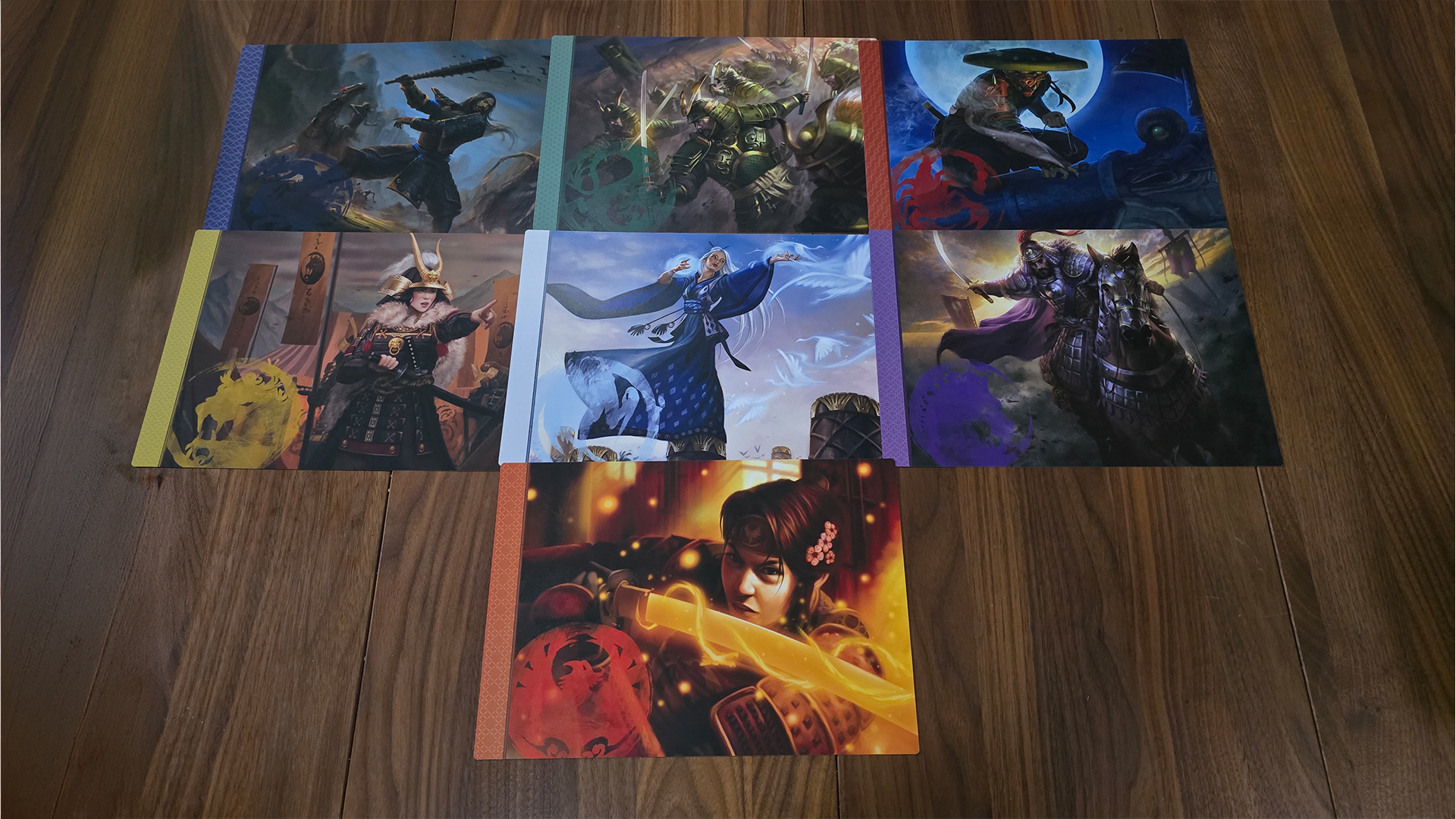
Designed by Matthew O’Malley and Ben Rosset, and set within the world of Legend of the Five Rings, a fantastical world drawing influence from feudal Asian cultures, Gunsen: The Battle for Toshi Ranbo pits anywhere from 2-6 players against one another in a race to complete objectives, with victory going to the first to place all seven of their fan markers. Before starting, each player picks one of the seven clans to play as, each with unique buildings, heroes, goals, and more, alongside their color-coordinated army of little samurai dudes. Each one has all its components gloriously contained in its own little tuck boxes, which, for someone who finds that a good storage solution can be a huge deciding factor in playing a game, welcomes them with open arms.
After picking a spot on the double-sided map (one side designed for 2-3 players and the other for 4-6) to set up your base and make the initial deployments, the game begins. Turns are surprisingly straightforward in Gunsen, with you selecting an action, performing it, and then, if it results in any of your forces occupying a space with an enemy, you fight. The orders themselves include recruiting troops, gaining influence (a resource spent on completing goals or other items), expanding, which will earn you other resources or allow you to construct structures or tactic cards for your faction, or visiting your armory, which will allow you to roll more dice in a battle that turn. However, these actions get far more powerful and expansive as the game progresses, which turned out to be my favorite aspect of Gunsen.
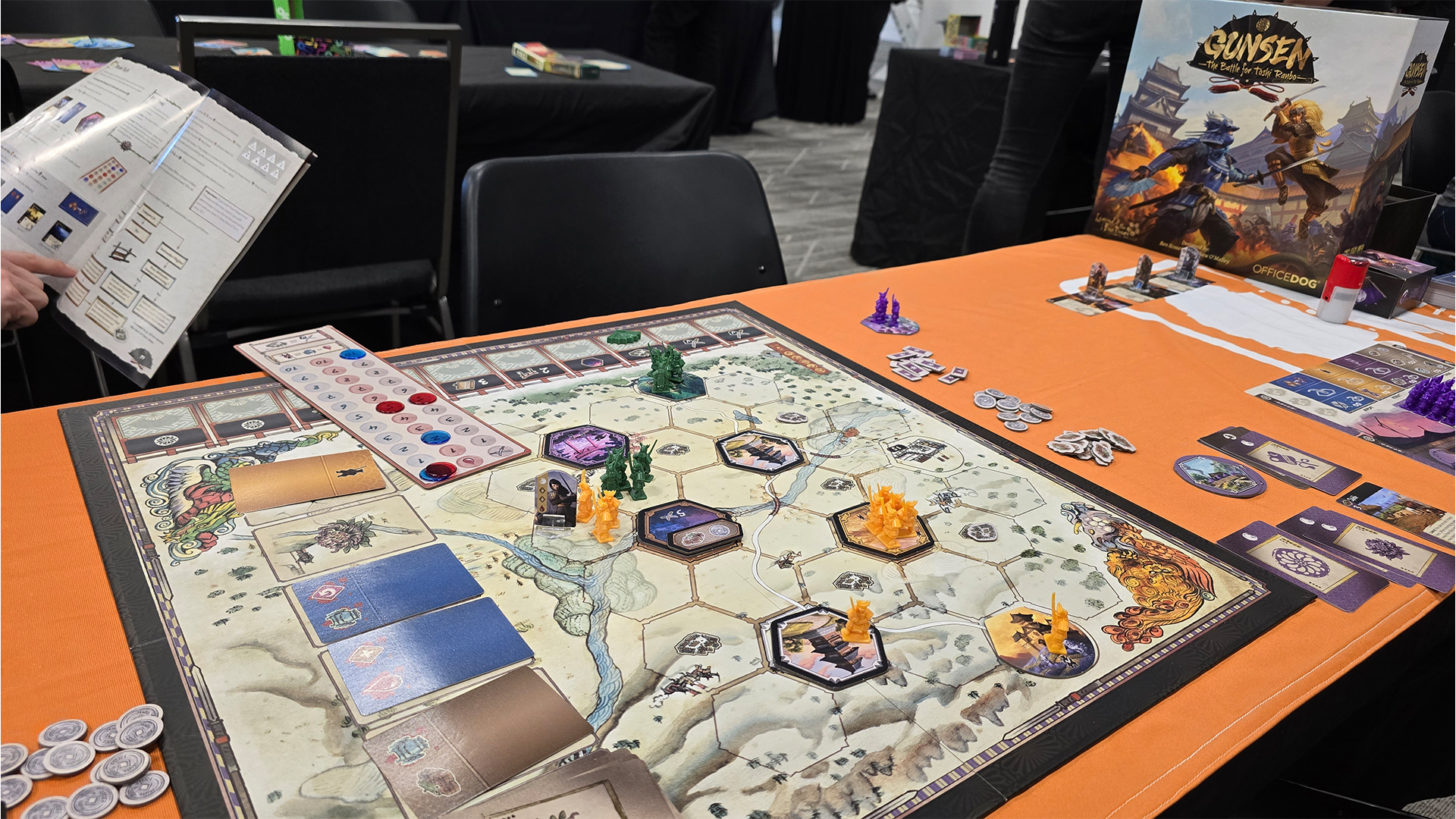 In order to perform any of the actions, you will pick a card from a store whose color matches the order you want to take. These usually will grant you some benefit upon pulling them and may have a cost, but once you take them, you slot them into that specific action, and from then on, every time you perform that type of action, you gain that benefit again. It’s almost tableau-like. From even my first game of Gunsen back at PAX West earlier this year, when I demoed the game, I fell in love with this system specifically. I love how every action made my options better or gave me more goodies to play around with. During that game in particular, playing as the more combat-focused Lion Clan, I eventually got to the point where I could bring out five recruits every time I took that action, instead of the single one that you are allowed at the start. This let me throw my army into encounters with little hesitation, knowing that so long as a yellow card was on the board to pick from the next round, I could easily replenish my troops if things went bad.
Ironically, though, combat is also where I found Gunsen to stumble the most, which is a bit of a shame. While at its heart, it is about rolling dice and seeing who rolls better, Gunsen’s setup is a bit convoluted and never feels as smooth as the rest of the game does. You have armor symbols, sword symbols, and blood symbols, and by comparing blood and sword values with the armor values, you subtract something, and then both sides remove forces. The number of units, cards you’ve drawn, and special hero abilities can all augment this process, giving you bonuses or allowing you to reroll, but it just feels like a bit much. There is a tree diagram for the whole process, for God’s sake, in the rulebook. If they even just removed either the sword or the blood symbol, it would make things better, but trying to explain it to a new player, myself included, can be a chore in itself, and it’s by far the biggest checkmark against this game in my eyes.
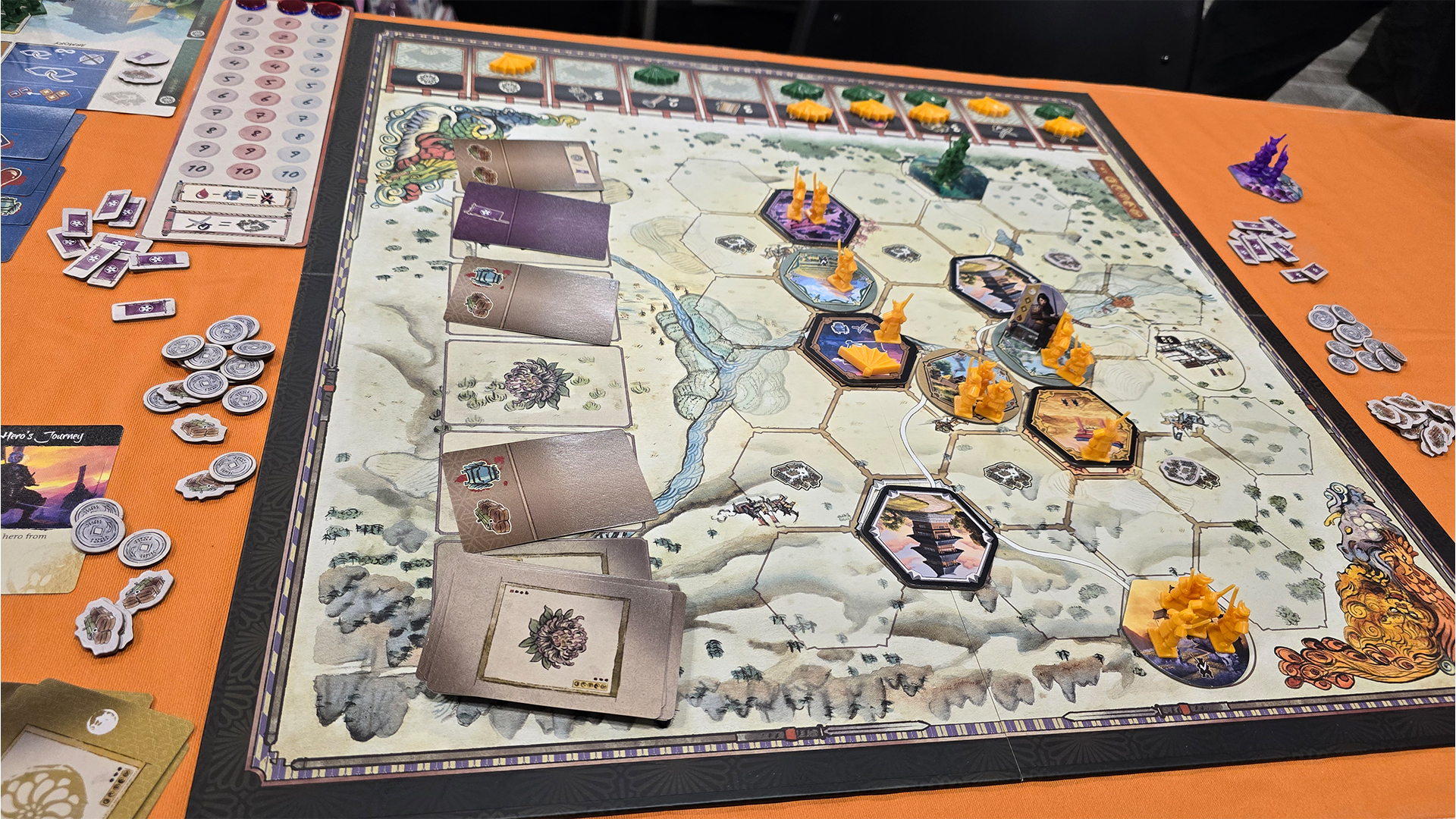 Gripes with combat aside, it isn’t enough of an issue to blemish my enjoyment of Gunsen too badly, especially as I play more games of it. I’ve been surprised by how varied each of the clans feels, from the Crane Clan’s greater emphasis on and utility with coins to the Dragon Clan’s special building that allows orders to be placed under any action column. All of these make for some great interaction and replayability (it’s a big bummer that the game doesn’t come with player aids or a breakdown of the clans, but BoardGameGeek has some great resources in that regard). So much of Gunsen reminds me of Stonemaier Games’ Scythe, from the asymmetric factions and holding territory and fighting one another to the race to see who can complete enough objectives first. Considering I love Scythe as well, perhaps it’s to be expected that I would also fall for Gunsen.
Gunsen: The Battle for Toshi Ranbo was one of the standout surprises during PAX West and has quickly fought its way to become one of the best board games I have played this year, even with its oddly overcomplicated combat system. By keeping all of each faction’s components contained in its own little boxes, it’s one of the easier games to set up, too. Even if you don’t have any knowledge of or attachment to the Legend of the Five Rings property (like yours truly), Gunsen still offers a really solid and intriguing area-control and tableau-building experience, with the added benefit of giving you sweet little samurai minis and factions that genuinely feel unique from one another. It’s earned its place in my “must-take” bag of games I bring with me to every game night.
Irrational Passions were provided a review copy by the game’s publisher.


