

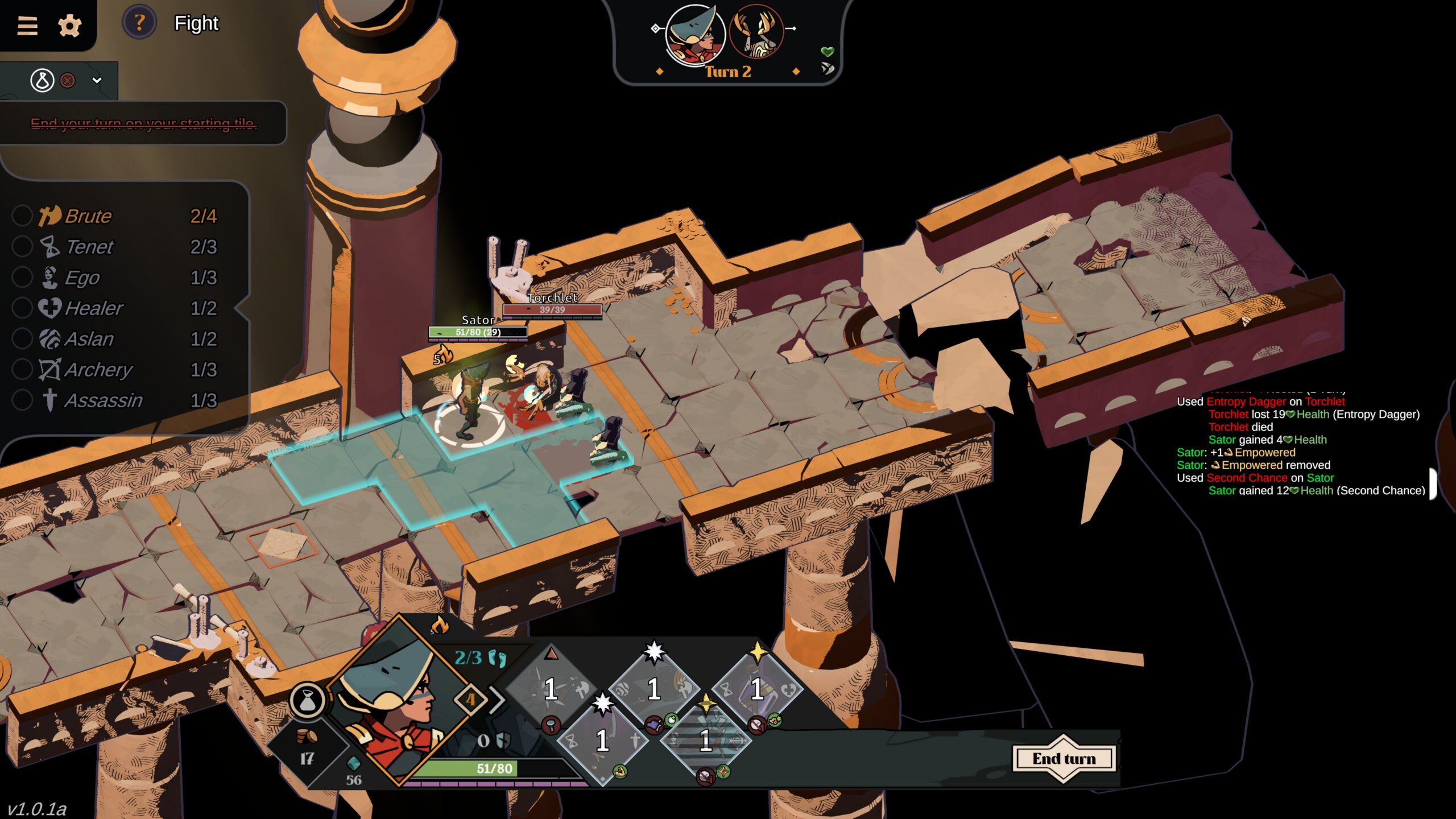
Consider Sator.
He curiously and dutiful delves into the Rhinegold, an old place lost to time and ancient disaster, that he hopes holds the secret to saving his people.
In it, the old lords of the place, maybe inspired by his bravery or simply amused by his naivety, grant him boons to make his journey deeper and deeper into the old world slightly less demoralizingly punishing. Hell, slightly possible at all.
You move this hero from room to room, accumulating power and slaying foes until you meet your doom. Then you wake up and do it again.
Sounds familiar, right? Deified follows the tried and true outline of just about every rogue-lite experience made in the past decade or so. I didn’t find its story to be so unique as to stand out from its contemporaries, at least not as much as its modest but charming art design. Battle maps and sparse slide show panels for minimalist cutscenes are less remarkable than the monster designs, which are both unique and detailed. The Lords themselves, combat with whom are end-goals of the journey, are memorable looking, though I wasn’t much moved by anything they said.
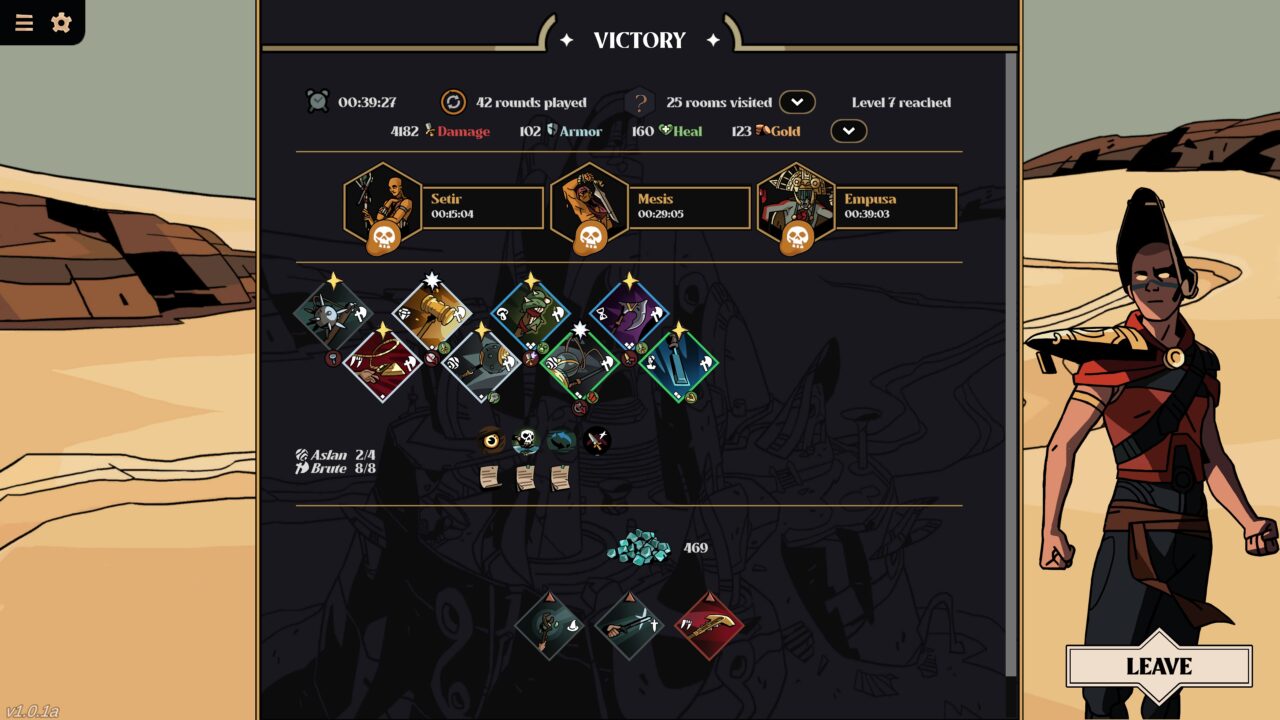
How you make the journey in Deified is unique from its peers. Maybe not moving room to room, which are just board game-like spaces on a map each with their own activity inside – buying new relics (read: attacks), healing from battles, gathering passive boons that strengthen you overall or augment what you’ll find in rooms to come, etc. That’s also par for the roguelite.
The combat is what this novel little turn-based strategy can really hang their hat on. Each relic is a combat ability that can be assigned to a slot – relic slots start at two but can be expanded through leveling up. There is no resource cost to use any amount of these per turn, your only limitation to how many to use per turn being things like range. The only points to keep track of outside of your health is your movement, and this is freeing. I really loved thinking a turn ahead and absolutely smoking an enemy with a barrage of eight attacks as a reward for my patience. Each new relic slot comes with a boon, maybe it makes the attack stronger or grants you a buff when you use it. It also comes with a drawback, like limiting the types of relics that can be slotted there or randomly buffing an enemy when attacking from that slot. Managing this is a surprising level of challenge. This is largely the balancing limiter on your turns, ensuring that you’ll always need to plan around the wrench being thrown in your growth strategy. Everything could be going great until your next slot requires that you can only use an ability on certain turns, changing your whole activation order for the worse.
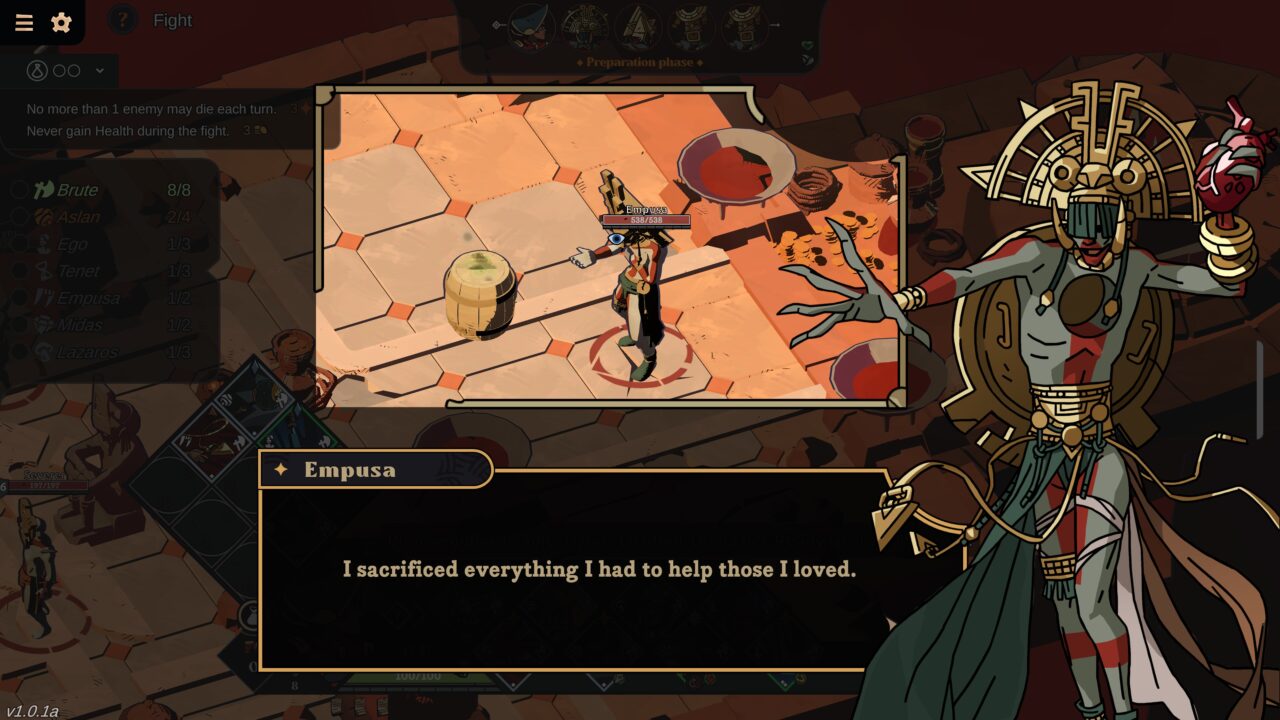
But action freedom is also treated almost like a de facto gentlemen’s agreement between you and your opponents, who will also go all out to send you back to the entrance. No single enemy is tough by themselves, but the combined actions of a well balanced enemy squad (of which there are many), can exploit their own strengths just as copiously as you do your own. Mixed with bosses, who often further benefit from the presence of their friends by playing into passives unique to them (one whose attack range gets larger the more of their allies you kill is a good example of this), and this game has a hell of a learning curve. It took me quite a few runs before my first clear, and it was largely because learning how to match power with power with some of the late game bosses often felt like riding a bicycle with one wheel. They aren’t all created equal, some bosses like Empusa can be outlasted with builds focused around doing crazy direct damage upfront. But some, like Karma, are very tricky and I’m still not quite sure how I’m supposed to beat more than 11 hours in.
 Relic Lord and Classes provide sort of memetic expectations for what these relics do. Lazaros is poison based and Acrobat focuses on movement tricks (and so the Lazaros/Acrobat relic Spore Smoke, fills an area around you with smoke and teleports you out of it.) Stacking relics of similar class can provide class bonuses. Equipping 2 Brute relics makes every attack you make with one of them causes a subsequent new debuff, 4 will make every Brute attack hit harder for each debuff a target has.
I really like this in theory. In practice, this straightforward Brute strategy is the only one I’ve been able to make work consistently, thanks also to passive buffs you can unlock points to allocate to via the Temple. Giving yourself something simple like more attack range (making melee abilities signature to Brute act more like mid range attacks) or as odd as adding more enemies to every fight (for farming purposes, no doubt) is a thing that requires a lot of tinkering with, the process of which I haven’t much enjoyed as so many of the potential skills don’t add power or utility in immediately obvious ways.
Still, there’s nothing quite like a trip into the Rhinegold. Deified may be too shallow an experience for hardcore tactics lovers (no action points to manage, facing doesn’t matter, etc.) It might also be too difficult for the tactics-casual or tactics-curious. That said, the smoke em if you got em approach to attack dealing, and low drag resource management could make a liar out of me, removing the upfront barriers to entry and replacing them with meaningful challenges throughout.


