


I am absolutely a Remedy fan, so Control Resonant, Remedy’s follow-up to 2019’s Control, was something that didn’t need to grab my attention, I was already in. Remedy has been building its “connected universe” since Control initially released, and folks that had played both Control’s two DLCs, or even Alan Wake 2’s DLC “The Lakehouse,” already have the setup for what Resonant is bringing to the table: a Manhattan warped and changed by an unknown force, and Dylan Faden is now in our control, attempting to redeem his actions from the first Control.
To catch anyone up who hasn’t tried Control or bounced off of its industrial office building design, Control Resonant takes place in a universe where the paranatural is studied and understood by the secret United States body, The Federal Bureau of Control, or FBC for short. In Control, we played Jesse Faden, an outsider who discovered the FBC’s hidden headquarters in New York City, only to go on and become the Bureau’s new Director. Control Resonant takes place seven years later, when the Director’s brother, Dylan Faden, wakes from his seven-year coma to find the Bureau’s home base shattered and the terrible forces from the first game have escaped their containment. New York is caught in an otherworldly event, and you, as Dylan, along with the other surviving members of the FBC, have to fight back.

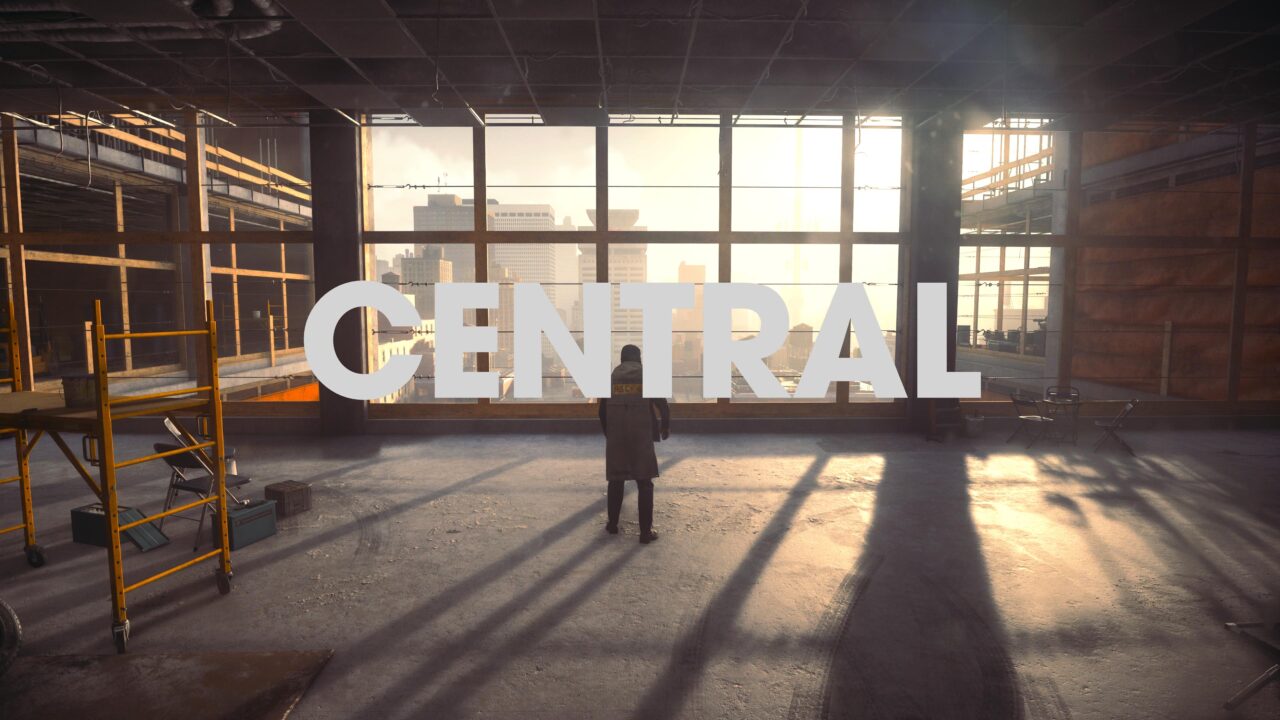
New York is split into several “open zones” that are all interconnected, simulating a makeshift open world. The zones all have simple names, like “The Park” or “Central”. Activities in Control Resonant’s zones are split into pretty easy-to-follow categories that you can generally challenge in any order you want. Usually there are two core activities in each zone, with additional side missions and secrets spread throughout each zone.
One such activity are areas known as “Faults,” which is where you’ll chase Jesse’s trail. Here, the reward is always some new traversal ability that should give you access to new areas or new side missions. The other objective is each zone’s boss, known as “Resonant Entities”. This is another activity that usually involves you investigating a part of the zone that is particularly warped around a landmark.
One such landmark is the Factory in the Central zone. Here, you follow the story of an FBC employee who escaped the Oldest House and was haunted by one of its very mysterious features: the Furnace. The Furnace appears like a normal, fire-blazing furnace, but seems to be a paranatural entity of its own that speaks to some people and asks for human sacrifice. A lot of the stories around the Resonants are pretty dark, and the Furnace boss is a very chilling monster that came to be as a result of the phenomenon happening all around New York. When you defeat a Resonant, you gain a new combat ability, but also the world pushes forward, mobs of enemies respawn, and all the enemies in the world get a little stronger.
Across the zones are side quests, minor objectives like defeating enemies in a certain area or helping some FBC troopers, and sometimes very fun and hidden secrets. All of it contributes to the world and to Control Resonant’s excellent tone of somberness and levity.
 Following Up The Oldest House
 Following Up The Oldest House
At its heart, Control Resonant is a sequel to Control, and it spends a lot of time exploring more of the narrative Control left us wanting more of. While we got Jesse Faden’s story before, of her outcast life until she found the Bureau, Dylan has a very different story and relationship to the FBC. The major crises from the first game involving the Hiss, an extra-dimensional soundwave that possesses and warps people, continues in Resonant, with characters like Dylan deeply tied to what’s going on with the Hiss.
A lot of the characters treat Dylan like an outcast, or pariah. We get to see Dylan’s relationship with the FBC through his conversations with Zoe, your handler. Since you’re technically a dangerous FBC asset, you spend the game under Zoe’s supervision, and her back-and-forth with Dylan throughout the game does a great service to both characters. Dialogue in Control Resonant is full of choices on a dialogue wheel, with some really different outcomes depending on your choices as Dylan. This is true with his friendship with Zoe across the game, and through several sidequests in the world.
 Once I let myself just explore the streets of Manhattan freely, as opposed to checking off objectives for experience, I started finding weird sidequests, some that left me speechless, or laughing, sometimes both. I found a Karaoke Machine in a party-gone-wrong that needed to have its song finished or people would die. This resulted in Dylan singing into the machine while people watched in fear of you choosing the wrong dialogue option, which would lead to one of the civilians dropping dead on the dance floor. It was a great use of the dialogue wheel, of the weird rules Remedy has created in this universe for supernatural items, and the very real stakes there are across Resonant. Some sidequests do have different outcomes depending on your choices. Resonant definitely rewards you more if you take your time, try and learn as much as you can about the weird happenings in these side stories, with them sometimes ending hopefully, or tragically depending on the choices you make.
Exploring Manhattan is also a pretty huge change from exploring the Oldest House in the first Control. Beyond its segmented zones, the “Patterning,” which is what the FBC says to describe how New York is shifting in this game, has made New York a whole Super Mario Galaxy level. One of the traversal abilities you get pretty early on from one of the Faults is the ability to “shift” gravity to another direction. Say you walk up to a wall that’s actually a road going straight up, now by touching that surface and hitting L1, you can shift onto, so now it’s the floor, and you can progress in a new direction.

While difficult to explain, it makes so much sense the more you use it. This allows the levels to twist, turn, flip upside down, and often repeat themselves, just up or down. Some of the level design using this idea, but at the end of the game, is mind-boggling and beautiful. I love stuff like this, and it feels right at home in a Control game. I tried to capture how easy it feels in a GIF, but when it’s happening in combat and mixed with later abilities you get, it adds this level of mobility to combat that makes this game feel very unique. Plus, there are missions, objectives, and secrets hidden in these gravitational anomalies, and they are so fun to find.
This is one aspect of the level design, but there are also zones dedicated to the major antagonists of the first Control, the Mold and the Hiss. The Mold is another extradimensional entity, growing like a fungus that looks blue and fuzzy, and spreading rapidly. It apparently smells very good and tantalizing, but if you eat it, you just become a mold monster. One of the zones is fully taken over by the Mold, and this is another completely different level to explore, covered in blue mold, much like the Hiss area has warped, red buildings.
Each area has its own landmarks, and exploring, looking for secrets is usually when you stumble into a part of sidequests. Most of the sidequests have multiple ways of starting them, from many different directions. They aren’t necessarily different if you get to a certain part early, but there are slightly different permutations that can play out depending on where you go first, and I think it’s a brilliant way to make them more interesting. I love showing up in the middle of a story and figuring out what happened. One sidequest sees members of an exploration squad having all their heads suddenly explode, one by one. You can start this quest by finding one of the bodies, or by finding the strange area they were investigating. Depending on who you talk to and how much information you have, this is another quest that can play out pretty differently.
Rewards for these missions or sidequests are often artifacts, which act as trinkets or charms that can give you various buffs in your build. There are unique ones from almost every major sidequest, but many of the quests really were just fun and felt fresh, like a reward of their own.
Crafting charms, upgrading your gear, spending skill points, it’s all done through a living menu in Control Resonant called “The Gap”. By holding the A button outside of combat, Dylan will collapse and enter a separate area where he can craft his build for combat.
A New Form for Combat
Combat in Control Resonant is a huge change for Remedy, being their first time actually making a game with action combat. You wield The Aberrant, a weapon that changes and adapts to whatever Dylan needs. You get to choose at the beginning which primary form you want the Aberrant to have, of three options: twin daggers, a scythe, and an axe. You’ll be able to unlock the other forms later, and each form of the weapon has its own skill tree that you use crafting ingredients to upgrade throughout the game. I found the primary form of Aberrant kind of disappointing though, the weapon form really only dictates the initial few hits of your combo, and while each form has certain passive abilities, like a higher crit rate or being able to launch enemies into the air, I didn’t find any of the choices had a huge impact on how I play.
This is only one third of the weapon customization, though, because in addition to Aberrant’s primary form, it has three secondary forms, like a massive hammer or a whip, that have more play in status effects, like weakening an enemy so they do less damage. I generally liked these forms more because I feel like they complemented the special abilities in the game more, adding status effects or taking advantage of one of the status effects my combat abilities created.
One such status is “infected,” which you can accumulate on an enemy with the mold-based combat abilities. Like I mentioned before, you gain access to new combat abilities by beating bosses, and you’re usually given a choice of one of two options when you unlock an ability. So for defeating the Molded Resonant Entity, the boss of the Park zone, you can either get a sort of mold shot that fires rapid hits on an enemy, or the ability to summon a mold turret that does the same thing from a stationary position. I liked these choices because if you wanted to have more active abilities, there is always a choice for you.
The infected status is pretty simple, it does damage over time like any poison ability. But when you combine it with fire abilities that can apply burn, they can cause big explosions against enemies that have both statuses built up. It allows for fun combinations between the mold abilities and the fire abilities, which are another reward from a different boss.
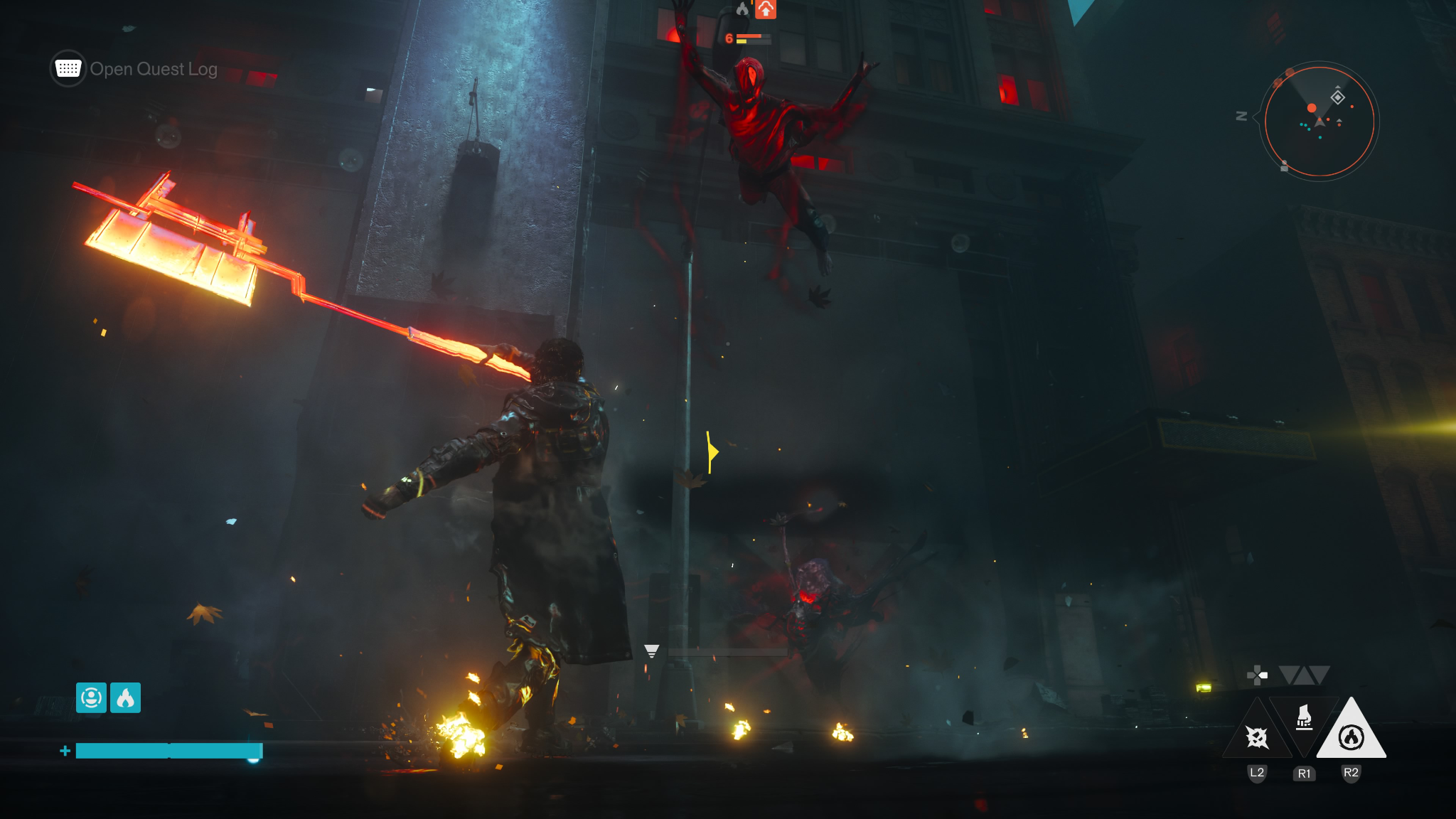
The real customization of the Aberrant comes from being able to choose your weapon’s finishing move from six different options. These also upgrade and get more potent as the game goes on, and they do the real damage over the basic combo that precedes these finishers. I gravitated to using a big swing that spins around your whole character, and by the end of the game I could use this finisher repeatedly, forever, just swinging and swinging, destroying all the smaller enemies in my way.
Ultimately, the combat is mostly hacking and button mashing your way through enemies. Your primary Aberrant form and its finishing move are on one button, while your secondary form is on another. Most early combat in the game is just mashing the attack button over and over again. Some of those fights early on feel kind of boring because of this. It wasn’t until I had a full set of abilities and had upgraded the primary and secondary forms of Aberrant that I felt like I was dodging, causing status effects, and making the most of my secondary forms. The absence of light and heavy combos, of a proper block, and pause combos are all a disappointment, though, and while I don’t think this game is trying to be Devil May Cry, I think its combat could have benefited from some of that nuance. Even just an ability to add a fourth or fifth hit to Aberrant’s primary attack string would have gone a long way.
I did find that combat just got better the more options I had. By the mid-to-late game, I had multiple weapon options, multiple secondary weapons, and switching between them felt more significant as I upgraded the Aberrant forms more. The loop of combat is also based around your energy meter, and using combat abilities like your Mold Turrets uses that energy. The only way to get energy back is by hitting enemies with the Aberrant. Meanwhile most potent passive upgrades really come at the end of each weapon form’s skill tree, like the scythe’s ability to make any enemy drop health from almost any regular hit.
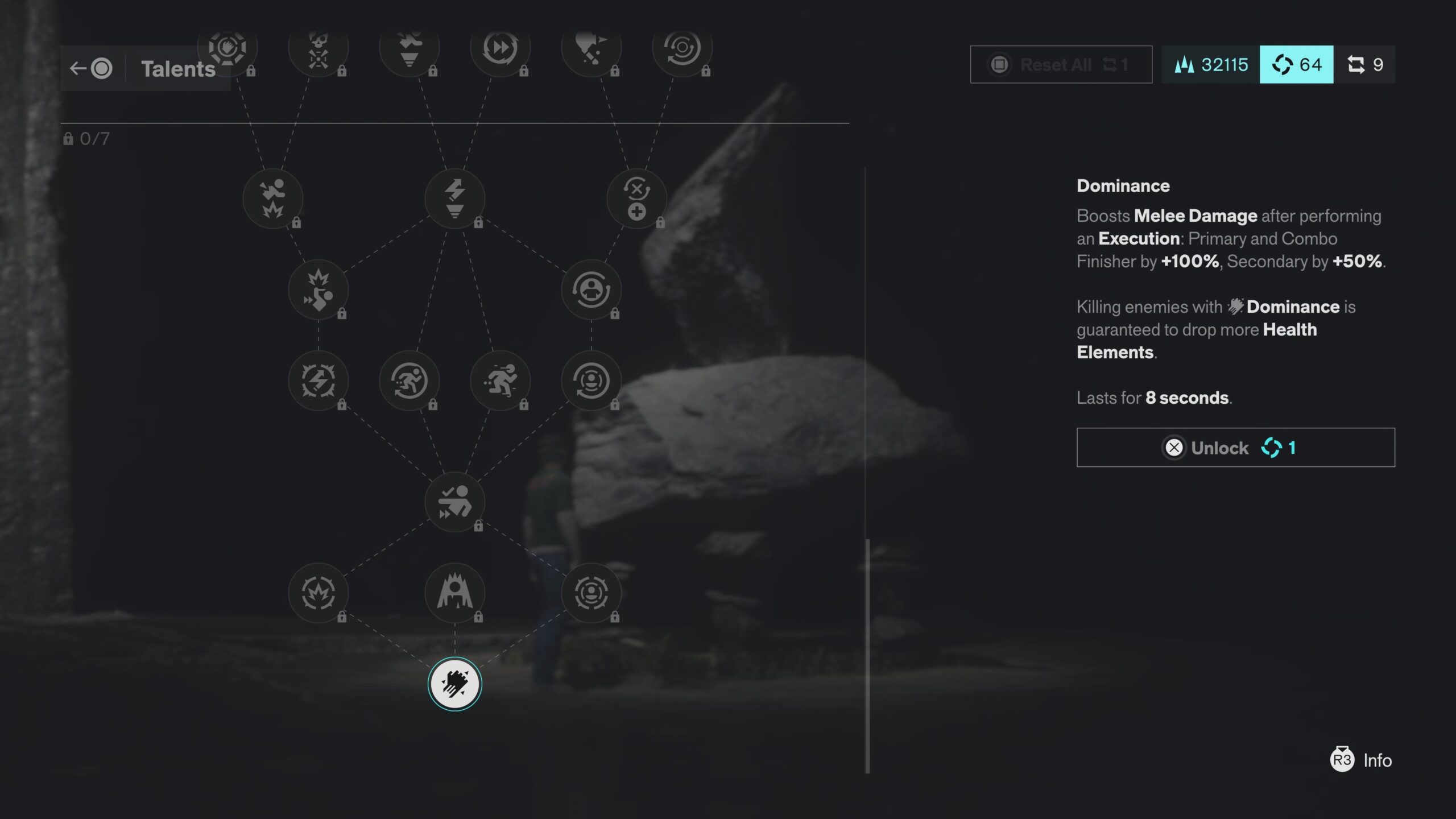
The skill tree, on the other hand, augments more of the special abilities you get from actually defeating the Resonant bosses. Each time you get an ability, you usually get one of two choices, and you’d have to fully reallocate these abilities in order to use the other option. Thankfully, there is a pretty robust training room so you can try all the available options before locking in your choices. Some of these abilities are reminiscent of the first Control, like creating a shield from rocks on the ground, or grabbing and throwing some debris to do stagger damage. A lot of the abilities have a sort of summoner option, where you can summon an ally made of mold, or a small gravity turret that shoots enemies.
The skill tree adds options like taking less damage when you’re surrounded by summons, or making projectile attacks do more damage. The starting node of the tree before it branches is the essential component to the combat, though: “dominance.” When an enemy’s stagger bar hits max, you can perform a finisher on them, kind of like God of War’s more recent iterations, and when you do, you get “dominance.” A lot of the skill tree augments this, but generally you’re stronger and do a lot more damage in this state, and the loop of combat is juggling between the smaller enemies, using your abilities on larger enemies, creating a loop with finishers to get dominance, and then building on that. I found the “do finisher, slay enemies” loop in Resonant to be really fun after more options opened up, having several summons on the field and flowing from one enemy to the next feels really good, but it does take a long time to really get there.
I started a little mixed on the combat, it felt repetitive, but by reallocating my upgrades a few times and trying some other options, I felt like I understood multiple different paths for combat, whether that be having “dominance” all the time and doing as many finishers as I could, or by staying back and letting all my summons do the work as they passively healed me. You need to hit enemies to get the energy to use more abilities or summon more allies, and so you’ll always be hacking away at enemies to some extent.
Enemies do see a pretty big change from Control. The primary enemies are still the Mold and the Hiss, different forces from alternate dimensions that have taken on human hosts to create terrible monsters. I was a little disappointed to see just these returning enemies, but as the game went on, there were quite a few surprises when it came to enemy types. It has a very strong second wind toward the end.
It’s worth mentioning that I played on a PlayStation 5 Pro exclusively in performance mode. There is a 40fps Balanced mode available for those who have a 120hz compatible display. I will note the game did fully freeze a couple of times, but never crashed. The frame rate dropped a few times toward the end of the game, when things get more visually congested, but from the get-go the environments and world in Control Resonant feel like they are pushing things to a limit. I do worry that folks on base consoles may have their performance mileage vary.
There is Something Special Here
This game has some magic in it. I think it’s very clever, and that’s apparent from the trippy, gravity-defying level design that you see even very early on in the game. Beyond just that, if you are someone that obsesses over the details, who loves a story told with pieces that you must assemble, Resonant is ready to play 4D chess with you. There is so much that happens across the 43 hours I played Resonant; unexpected reveals, confusing sequences that relied heavily on subtext, and absolutely jaw-dropping moments too.
It’s apparent in the level design, in the sidequest design, and in all the amazing surprises for people who love to overanalyze their video games, Remedy is, and always will be, the masters of this. Seeing Dylan’s relationship with the FBC is just one piece to a much bigger story, and the game does an excellent job of collecting all those pieces together at the end, while also setting up what happens next every step of the way.
Final Thoughts:
It’s fair to say Control Resonant is excellent. It’s also fair to point at its combat as a weak link. It takes a while to develop into something full of options and depth, and with how much freedom you have exploring the world, you can spend a long time missing an essential ability just because you haven’t been somewhere yet. Even still, in spite of this, there is something pretty fun that grows out of the combat.
Even 40 hours into the game I was so excited to see what was around the next block, at the end of the next tunnel, and what was going to happen next in the story. I spent my time doing just about everything, and then continued into New Game+, which sees the enemies get stronger and gives you time to grind more experience. It’s the kind of game that doesn’t require you to find all the documents for completion, but I want to anyway. I want to read every inch of text and dialogue in this game like a tome. Remedy are superb storytellers and make incredibly fun worlds to explore that are often as trippy as they are fascinating. That is maybe the most true in Control Resonant, and I am so thankful for it.
This game was reviewed on a PlayStation 5 Pro system with a review code provided by the publisher.
